Metal Max Recyclers
What Sydney Regulations Affect How Scrap Metal Must Be Collected and Processed?
If you’re a construction firm in Sydney, you’re likely to have a heap of odd material and offcuts sitting around, possibly even some old fittings, copper wire, or reo. Most builders take the shards and chips for granted and throw them away, sell them, or get rid of them. However, the regulations governing display and removal of scrap metal in New South Wales are more complex than many people think, and can be very expensive to get it wrong!
This guide explains in detail what the law says about the collection, storage, transportation and disposal of scrap metal in Sydney, and how it applies to construction firms that create metal waste weekly.
This is a Quick Story: Why This Matters
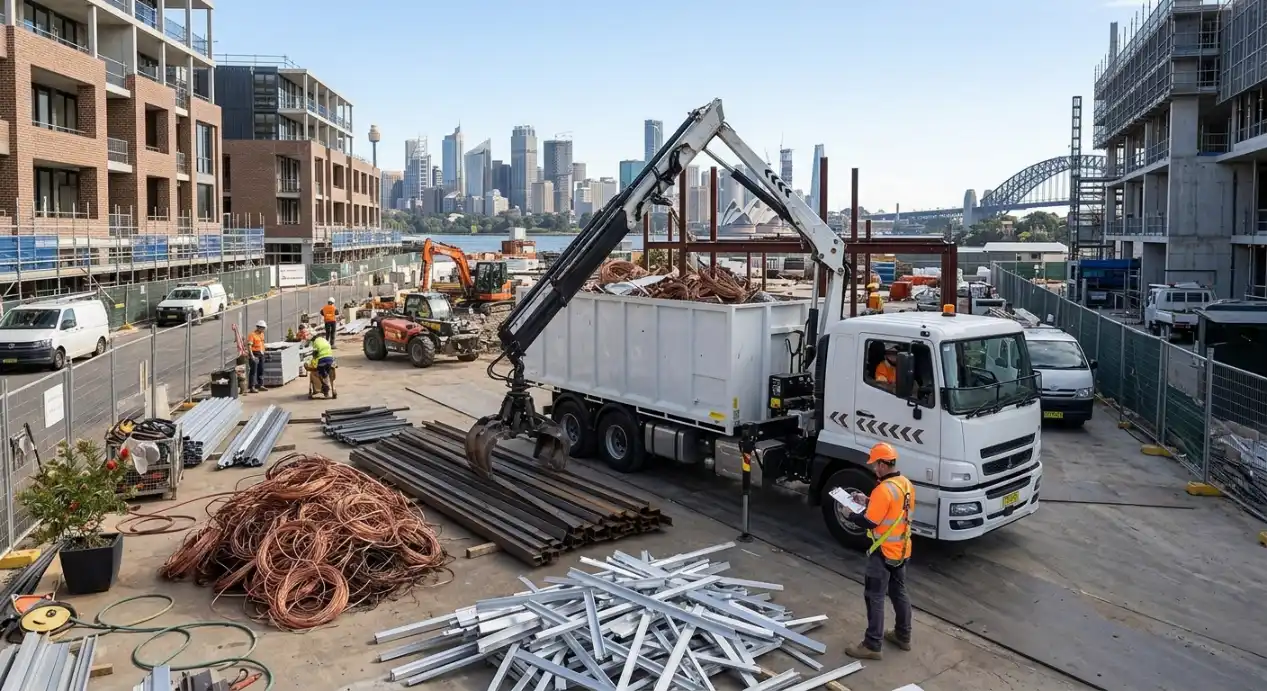
Stretching way back to last year, a friend of ours, who shall remain unnamed to protect his privacy, namely Dave, tended to bring someone along in a ute on Fridays to collect the scrap at the site for the week. Practicing the bank without paperwork and everyone satisfied. So far, no registered scrap metal dealer was collecting this metal: until that is, until an EPA compliance officer stopped by on a routine visit and asked a simple question, “Who’s collecting this metal? Are they a registered scrap metal dealer?
Dave couldn’t answer. Matename did not exist. No record of any kind, no ID checks, no record of any sort; where was this metal going? No transaction ever was recorded, no ID was taken, nothing showed up; where was this metal going?
Of course, Dave wasn’t personally charged that day, but his location was marked, and a very uncomfortable phone call was received by his head office regarding supplier compliance issues in the supply chain. While it can be kind of a problem that just shouldn’t happen, it’s certainly an issue that can be easily prevented if you know the rules; that’s why we created this guide for builders like him.
The Legal Understuff: The Scrap Metal Industry Act 2016
The NSW Scrap Metal Industry Act 2016 and the NSW Scrap Metal Industry Regulation 2024 are the key laws regulating scrap metal collection and dealing in Sydney and NSW, administered by the NSW Police Force’s Security Licensing & Enforcement Directorate (SLED). It is this Bill that breeds the requirement for a scrap metal license, not only the one that has a shopfront but any person who carries on a business and deals in scrap metal.
There are a few aspects of this law that construction companies need to be aware of:
- Businesses involved with the buying, receiving or collection of scrap metal must be registered with SLED, and those working without registration may receive a maximum fine of approximately $55,000 to the business.
- The rule now applies to anyone or any company that trades in scrap metal on more than 6 days over a 12-month period, and that they are “carrying on a business” of scrap metal, regardless of their own view.
- Registration is required to be renewed every 3 years, and any changes to the business (including address, business structure, location of the scrap metal yard) must be reported within 14 days.
- It is illegal to pay for scrap metal in cash from scrap metal dealers. Any payments have to be traceable (e.g., bank transfer), in order to track every payment in case it is necessary to review them.
- Dealers are obligated to report any transactions and suspected theft of metal to police and must maintain a transaction record for each sale, which should include the dealers’ contact with the seller.
In the language of a construction firm, it is quite easy to understand that for them, it is something that must be dealt with by someone who is registered as a scrap metal dealer. If not, there could be an unlicensed operator operating in your business, and you run the risk of reputational harm and compliance issues, regardless of whether you have the license. Wondering exactly what ID your team needs to hand over at the yard? Our guide on scrap metal identification rules covers it in full.
Students will learn about the POEO Act and the EPA regulating environmental rules.
Only half of the story is registering with the police. Once scrap metal has been collected, it must be handled in accordance with the Protection of the Environment Operations Act 1997 (POEO Act) and the NSW Environment Protection Authority (EPA).
There are general thresholds, for most facilities such as scrap metal yards, for requiring an environment protection license if they store, process or recover resources from waste on site to a volume exceeding these thresholds (generally 1,000 tonnes or cubic meters of waste at any one time). However, the EPA has given additional consideration to minimum environmental requirements designed to avoid soil and groundwater contamination as well as noise and air pollution near yards, and to minimize fire hazard, particularly at yards that tend to build up combustible material.
This issue is important for construction companies because it has an impact on the places for legal disposal of scrap. The consequence of failing to have a valid POEO license for a scrap metal disposal Sydney site may be that you are storing and/or processing metal in an illegal fashion, which runs counter to what is considered to be environmental law and will be problematic if the issue ever comes back to haunt you during due diligence or an audit.
Advantages of Lime for Construction Sites
A lot of material from the construction industry requires recycling, with structural offcuts, reinforcing steel, copper cabling, aluminum framing, and demolition metal all being examples. For the large number of construction activities and their frequency, most active construction businesses will obviously be subject to the definition of “carrying on a business of dealing in scrap metal”, unless they are careful with whom they deal.
In a typical compliance scenario here in Australia, it will go like this:
- Avoid engaging scrap metal dealers who are not registered with SLED, and an EPA license is required for the processing establishment, if applicable.
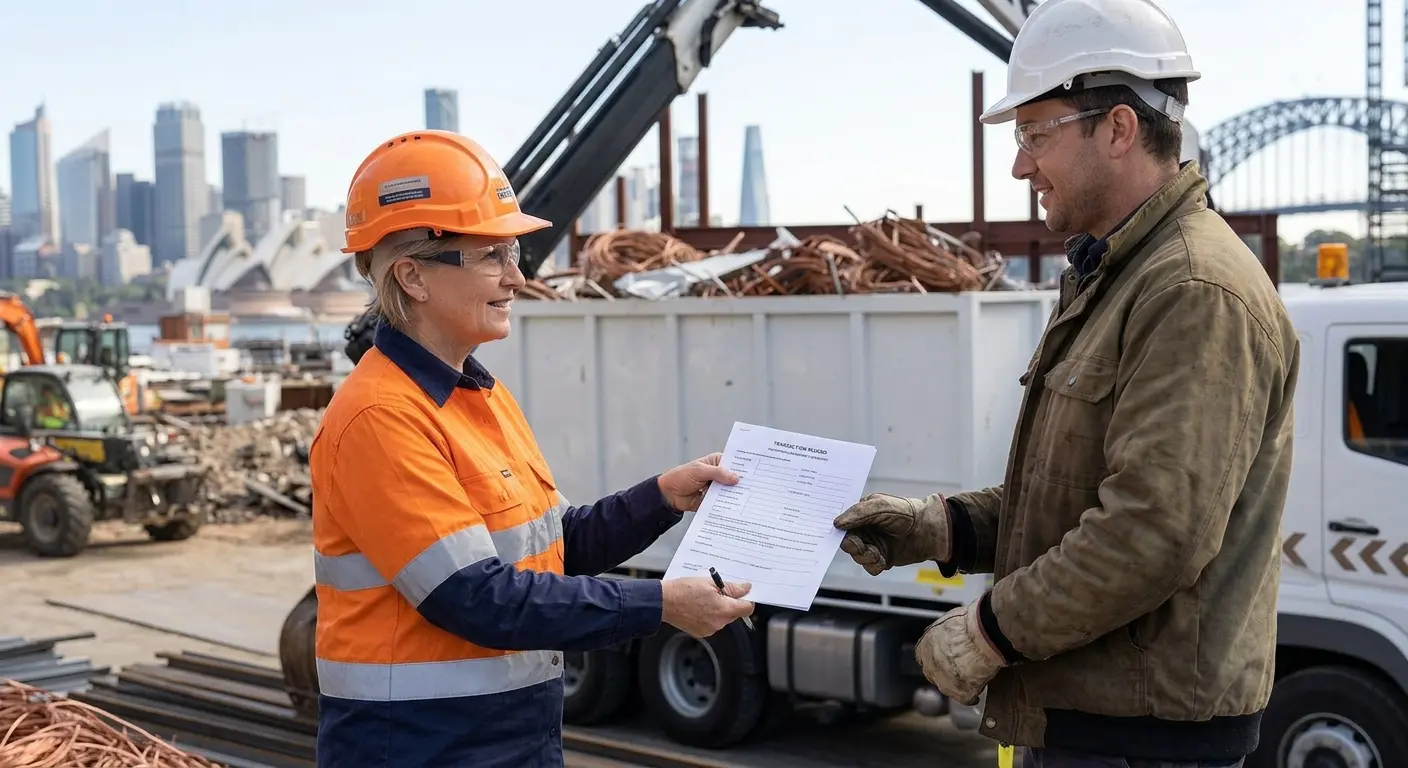
- Record the transactions correctly for every load that you pick up; not only does it help protect your business, but it also helps protect the dealer.
- Do not make any cash-in-hand agreements, as these are outlawed by the Act even for the smallest of loads.
- Create simple paper logs of property removals, time of removal, and property owners for larger commercial and government-related properties where compliance audits are more likely to occur.
- Take part in scrap metal collection from the initial planning stages of your website, not just as an add-on.
All this need not drag down a project. From then on, it’s just one less worry; you’ll have someone reliable and licensed to pick up the metal, it will be done in a legal way, and if anyone asks you about your paperwork, your trail will be clear.
What benefit does it bring to work with a Registered Local Partner?
This is the essence of why the scrap metal is even regulated in the first place; it is intended to prevent stolen metal, unregistered operators, and environmentally irresponsible processing, which cause the fall through the cracks of a valuable high-volume industry. If you own a construction company and you are lawful, there is no reason why you must necessarily ensure compliance to fly the road, only to be pulled up by a compliance officer at the last moment to cause a halt to construction work.
However, at Metal Max Recyclers, we operate within these parameters only, so builders around Sydney need not become experts in the Scrap Metal Industry Act to get their site approved! Collection & disposal is done properly & documented via our scrap metal collection service to ensure that your business remains above board with the police & EPA; no need to make a guess!
Book Compliant Collection
Ready to keep your site fully compliant? Get in touch with Metal Max Recyclers today for registered, hassle-free scrap metal collection across Sydney construction sites. Curious what your compliant load is worth? Check today’s scrap metal prices before you sell. Wondering why Western Sydney job sites generate so much of it in the first place? Read our breakdown of construction scrap metal Western Sydney.