Metal Max Recyclers
What Documentation or ID Do You Need to Sell Scrap Metal in NSW? (Metal Theft Laws)
You will know how strict this process has become if you have ever arrived at a scrap yard to drop off offcut material and copper piping only to be refused for not being able to present proper ID. It surprises many people, particularly tradies and small builders, when they think of scrap metal that’s simply scrap metal, have no questions asked. That’s a lost journey in Sydney’s construction world if you don’t discover the wrong side of the laws enforced on scrap metal and put you in a difficult situation in NSW.
In this post, we’ll look at what you can sell scrap metal legally in NSW, why it is the law to respect certain regulations, and the policy of metal theft laws on the overall operation of the yard business.
For Example, An Expensive Error by a Site Manager in Sydney
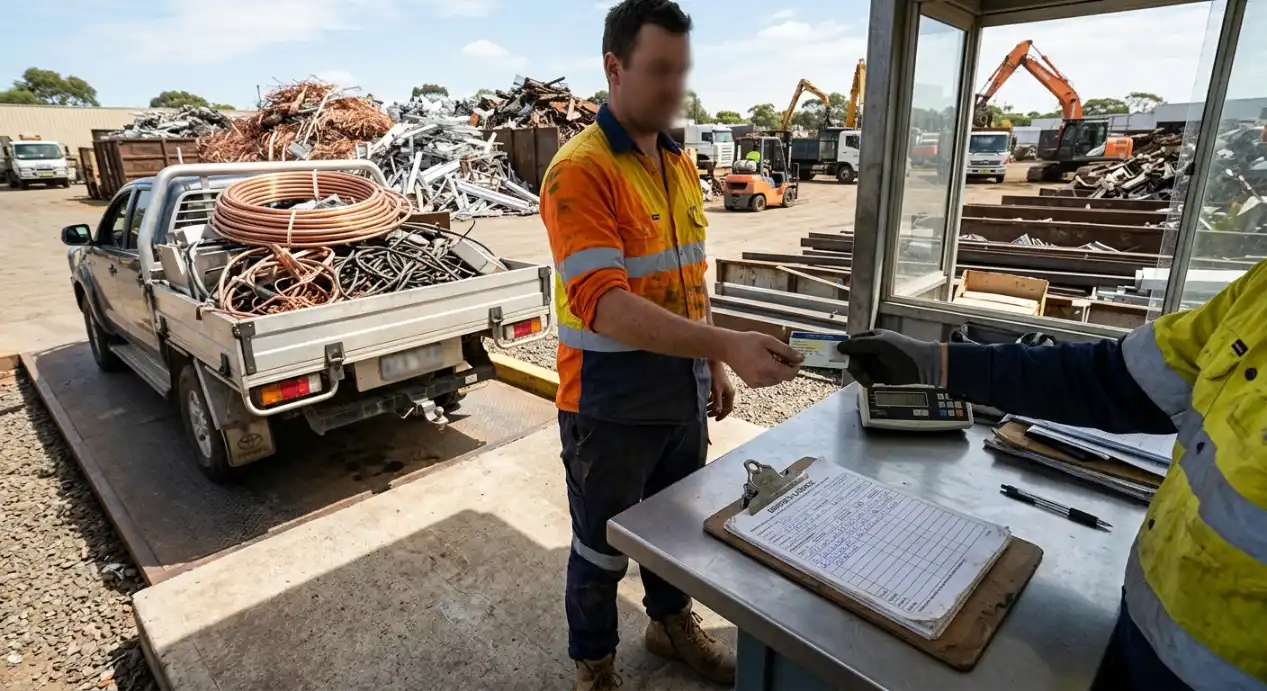
One of our site managers, when he was working at a project on the Inner West, had a ute load of copper pipe and aluminum offcut brought to a scrapyard a few months ago. Easy work, right? The laborer came without any photo ID on him at all, but only work boots and a receipt book, and the yard rejected the load straight through. No sales without ID’s. No exceptions, no sale without an ID.
Gone was a half day in a search for the correct documents, and the laborer had to return the following morning with his driver’s license for the yard to load a truck. And whilst it was a minor thorn in the flesh of a renovation, it revealed that another common discovery in the trade is the true lack of awareness, by most people, that scraping metal in NSW isn’t just another piece of cash in words and hands.
From then on, we ensure that all the sites offloading scrap have a proper ID from day 1, and it has never wasted a trip for us again.
The Reasons NSW Regulates Scrap Metal Strongly
For years, the issue of scrap metal theft in New South Wales has been a pressing concern, especially when it comes to construction sites with plenty of copper wires, pipes and aluminum fittings. Materials are stolen and carried around scrap yards without too much effort, providing easy opportunities for thieves to sell stolen copper or cabling for easy money, for which there was no record.
That’s why the Scrap Metal Industry Act 2016 and the Scrap Metal Industry Regulation were introduced. It is managed by the NSW Police Force, through its Security Licensing and Enforcement Directorate, to cover all registered scrap metal dealers in NSW. At its heart, the bill is about ensuring that each piece of metal transaction can be traced back to a real identification of the person, making it much more difficult for stolen metal to be sold anonymously.
That’s where scrap metal identification wins, and it isn’t something you’re going to do because you have to.
What You’ll Need When at the Scrap Metal Identification Shop
When you are preparing to sell metal in NSW, such as building offcuts, aged plumbing, or household metal, valid photo ID is required every time. It’s applicable whether you are a tradie, retailing from a Job Site, or a Homeowner clearing a Garage, or even a Business offloading material from a Job Site.
Before you take your load, and in accordance with the law, your dealer will need to document certain information from your ID; usually, this information includes:
- Your complete name as stated on your ID picture.
- Your residential address.
- Your date of birth.
- An outline description of the metal scraps being sold and their weight/quantity.
However, if a business or corporation is involved in the sale of scrap, the rules are a little different. The dealer must have the business name, its address, its ABN, and have a written authorization from a person with decision-making authority for authorizing the sale. This is definitely something to keep in mind when managing a construction company’s scrap metal disposal and preferring to have a steady procedure in place across all worksites as opposed to turning to individual employees for ID on a regular basis.
Scrap Metal Rules Around Payment
There are some spectacular surprises for people just starting out in the world of selling scrap; one of them is that cash payments are NOT accepted! The existing scrap metal rules prohibit dealers from taking cash and prohibit them from making a statement about taking cash. All transactions must be carried out via a verifiable process, which is typically electronic bank transfer and follows a process where your bank details must be provided at the time of transaction.
If you’re wondering why this rule was implemented, it has the same reason as the ID requirement: to eliminate anonymity and make scrap yards less convenient for recyclables. If a yard approaches you and offers instant cash with no questions asked, they are a good sign they are not legal, and you’re in trouble. Check our current scrap metal prices so you know what a fair, traceable payment should look like.
How This is Related to Scrap Metal Theft on Construction Sites
Scrap metal thieves generally target copper wiring, pipes, and air conditioning units because they have some resale value, and they are easily available for easy installation during construction. The identification and payment rules are in place in large part due to the frequent passage of stolen construction materials to “scrap yards” where no trail back to the stolen identity could be tracked.
Vehicles and vehicle parts come with a specific regulation, too. Dealers are not authorized to purchase a motor vehicle, or a major part such as an engine, chassis, or the body unless the numbers or markings that normally identify it, such as the VIN and/or engine number, remain on it. This seals another common way in which thieves may be able to move the stolen goods under a cover of legitimacy — our guide to the rules for scrapping a car in NSW covers this in more detail.
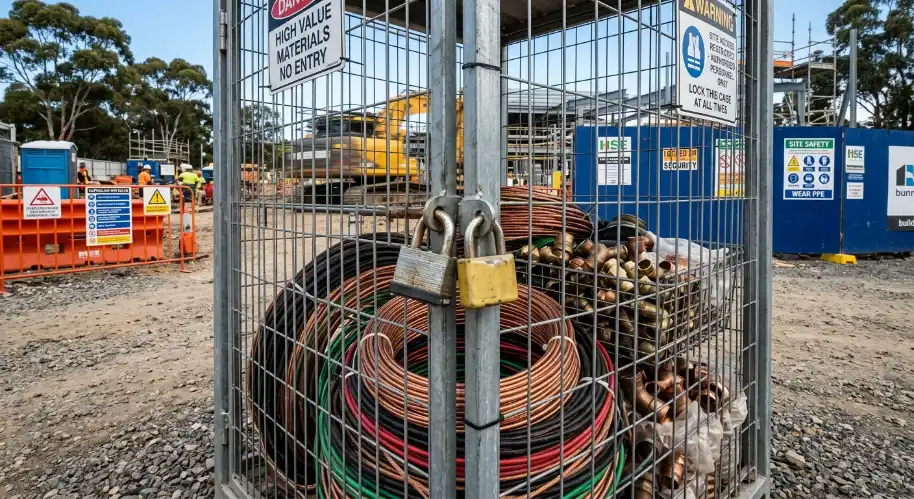
For people who are builders and maintainers of buildings, this awareness of these rules isn’t a thing of compliance, but it’s actually helpful to protect your own building site. It’s the little practices that make a big difference:
- Record removal of materials on site, particularly valuable metals such as copper.
- Take care to safely store the scrap on site and not leave it outside overnight.
- Only deal with registered scrap metal dealers, which you can usually verify prior to dropping off a load of scrap metal.
- Before everyone leaves to do an offload of scrap, inform them of the ID requirements for the activity.
Consider Registering as a Scrap Metal Business
This is frequently asked by construction clients. Scrap metal is not a business that requires registration, unless you are a business that makes a habit of selling off scraps of metal that you make from a renovation or one-off to other businesses. If carrying on a business is a regular occurrence in your business activities, it may be prudent to enquire about your obligations with NSW Police directly, given the actions of carrying on a business are based on frequency rather than intention.
In any case, the party purchasing your scrap, the yard itself, should be a registered metal recycling business. It’s the ID and payment rules that exist for the registration in the first place and compliance rules that come with it. Scrapping a vehicle too? Our car wrecking service handles the paperwork for you.
Selling Scrap the Right Way, Every Time
Whether you are clearing a renovation site or managing scrap across multiple builds, having the right ID and process in place saves time and keeps you on the right side of the law. If you need help managing site waste and scrap metal disposal on your next Sydney project, get in touch with our team for a straightforward, compliant solution.