Metal Max Recyclers
How Can Property Managers Handle Scrap Metal Removal Across Multiple Sites Efficiently?
Not much is discussed about the problem plaguing property managers who keep multiple construction or commercial projects on their hands; scrap simply keeps piling up, and no two sites run out of it at the exact same speed. The first location could be where chopped-up timber from a fit-out rematerialization is stored; the next spot could be a reduction in abandoned HVAC methods from a renovation; and the third could be on the waiting list for a demolition team before the materials are even hauled away. It’s such a time-consuming task to go to each of these collection sites for each need that most property managers simply do not have the time.
The short answer is that the most streamlined way to handle the removal of scrap metal from a number of different locations is to hire one scrap metal pickup service company to be able to arrange regular collections on each site, obtain a quotation for each site, and combine reporting under one account. That single judgment eradicates the necessity of trying to pursue several contacts, thereby eliminating the opportunity to cross-check pricing and manually monitor the collection process from specific contacts.
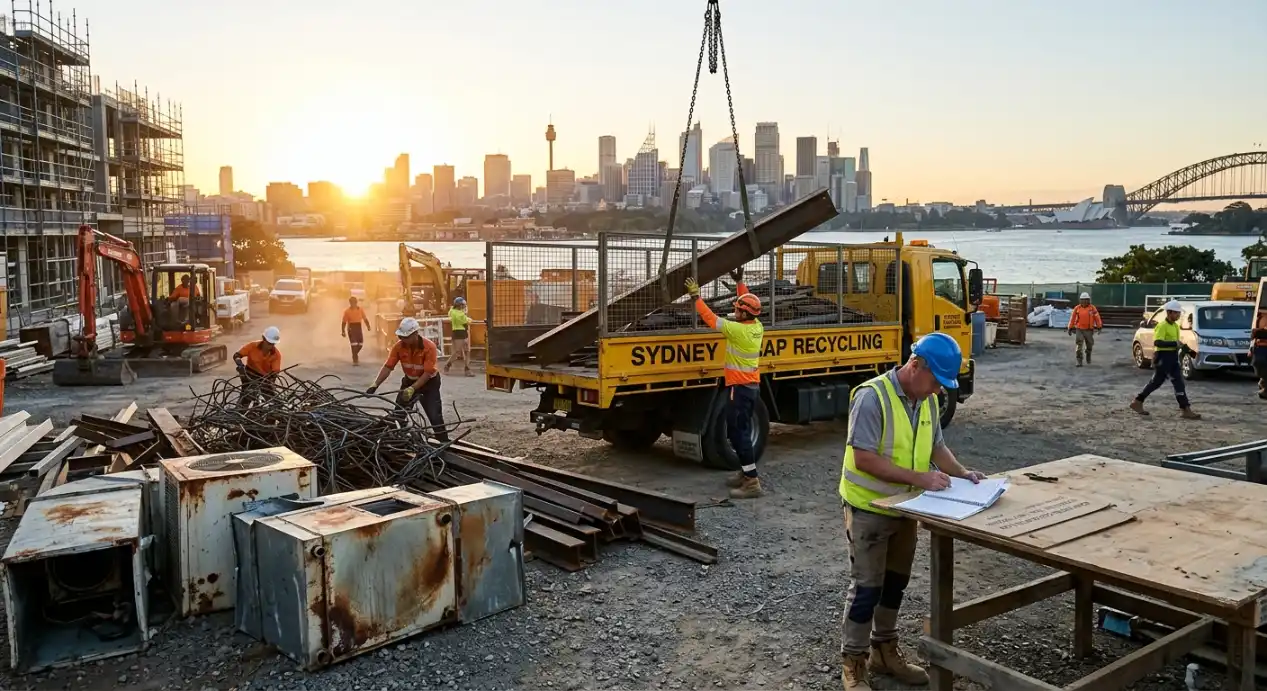
Why multi-site scrap management is so messy so quickly!
Where the three, five or ten properties are under a single manager, scrap does not behave as expected. Small amounts of offcuts and fittings are produced on a regular basis from some sites. Others experience a sudden surge, such as being the result of a stripped-out old boiler room or a warehouse rack dispersal. This typically results in:
- Refuse collected by 55% of facilities, with 45% of facilities reaching capacity. Skips are filled due to no collection: 55%, and facilities are full: 45%.
- The various subcontractors are bidding different prices for the same kind of metal.
- Lacks (1935– 1959) was never collected, nor was it documented when or from what location.
- Indents in the site clean up that are happening and delaying inspection/handover dates.
All these are relatively small in themselves. Across each of several sites, they turn into true cost and true delay.
A brief glance at a property manager who is managing too many properties
One of our regular clients has 5 commercial fit-out sites across greater Sydney simultaneously. Prior to working with us, his team had been managing scrap removal with the traditional approach, which is to call around on site when the skip started to fill up for a price quote. Five phone calls, five price points, and nothing when it came to who turned up quickly or not.
The turning point occurred when a site inspection was postponed two entire days, due to a buildup of copper cables and steel studs not being cleared off. The single delay cost the city more than a year of the scrap metal collection fee would have been in lost scheduling. He then transferred all of these metal removal locations into my single scrap metal removal services account, scheduled pickup dates on a regular basis for the busier sites, and all of the smaller sites were on an on-call basis. Since then, there have been no delays on inspection days to clean up the debris.
So what does efficient “scrap removal” look like with multiple sites?
It’s simple practices, not a complex system, that make handling scraps well around multiple sites. Not only do recyclers who grasp the site layout, access requirements, etc. work faster, but property managers who develop their strategy around existing commercial metal recycling alliances tend to team with the right recycler instead of making a special trip to the next one they find.
Usually this means in practice:
- The choice to implement a regular pick-up for higher volumes rather than allowing a skip to reach capacity.
- Having one point of contact for all sites, keeping pricing and terms the same.
- Ensuring the collection of weight tickets and record of collection for all picks and the reporting of these to owners or head office becomes much simpler.
- Processing the scrap stream of ferrous and non-ferrous together where feasible, as lots with a lower value of mixture are typically sold at lower prices.
- Notifying the truck and crew being sent ahead about larger jobs (strip outs/demolitions) to ensure that a truck of the correct size and crew is dispatched based on the job size/team size.
This doesn’t require any special software or new personnel. It only takes someone to consider scrap removal more as an active line item in his or her operations rather than as a reactionary job.
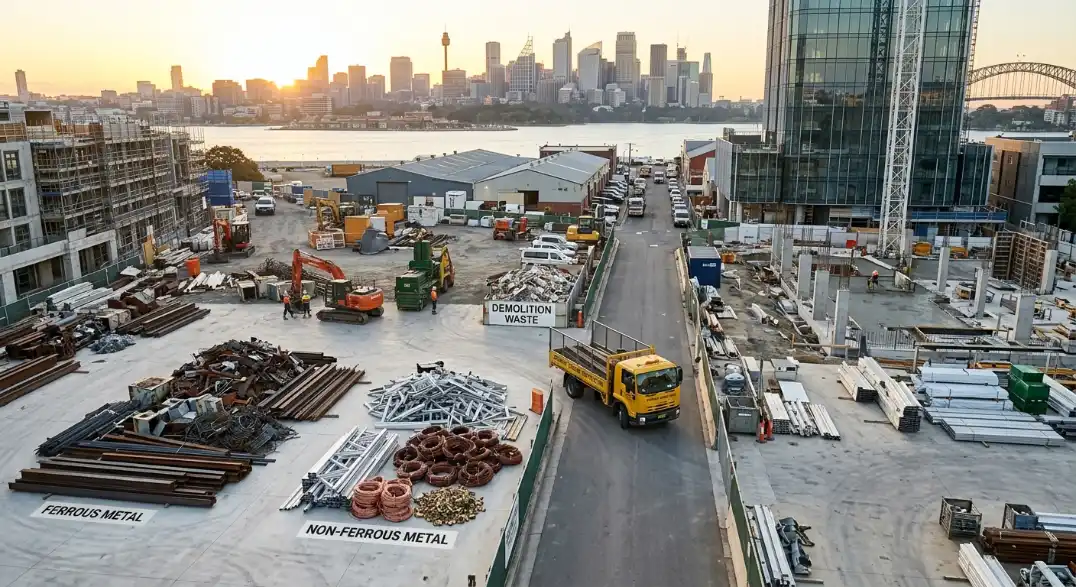
Sydney property managers do turn to local pickup for a number of reasons.
Sydney property managers opt for local pickup services for several reasons. Sydney sites are all very different in terms of access, with lots in the inner city with really narrow laneway access, to outer suburb locations with room for a full load truck. The scrap metal pickup Sydney company that already has a general knowledge of the flow of cars, council guidelines, and standard site layouts throughout the metro area can make plans that enable them to visit more than one site on a single trip, instead of approaching every pickup job individually. That local knowledge is what helps to make turnaround times snappy even if a property manager is managing a half dozen or so properties.
This is also a factor in your pricing as well. A day-to-day metal trader in town can provide a more accurate and more competitive price because metal prices are sensitive to the market. Check our current scrap metal prices before your next site clean-up. Unsure whether a mixed tenancy clean-out is worth the call? Our guide on scrap metal value explains how it’s assessed. Managing smaller sites too? Our guide on the minimum for free scrap metal pickup explains what qualifies before you book.
Integrating scrap metal collection as a part of routine at site
Last-minute material chaos is an area in which the property owner who avoids the problem is the one who sets in place scrap metal collection from the outset of the business and not just when the skip is already full. Spending a short time talking about a project at the beginning that includes anticipated metal size, access to the site, and an estimated pick-up schedule is the superior use of time to spend in a reactive scramble situation.
This minor change of tack, from reactive to scheduled, can, for companies dealing with several construction projects going at the same time, make the difference between a seamless handover and anticipated delays that spread down the backlog of a project’s schedule. Running a renovation instead? See what renovation scrap metal is worth cashing in before it hits the skip.
Book Your Multi-Site Pickup
Managing scrap metal across multiple sites doesn’t have to mean juggling five different phone calls. Get in touch with Metal Max Recyclers today and set up one simple, reliable pickup schedule for all your Sydney sites. Want to make sure every site stays compliant too? Read our guide to Sydney scrap metal regulations. Curious why some sites generate so much more scrap than others? See our look at construction scrap metal in Western Sydney.