Metal Max Recyclers
Renovating or Demolishing a Property: What Metal Waste Can You Cash In Instead of Skip Binning?
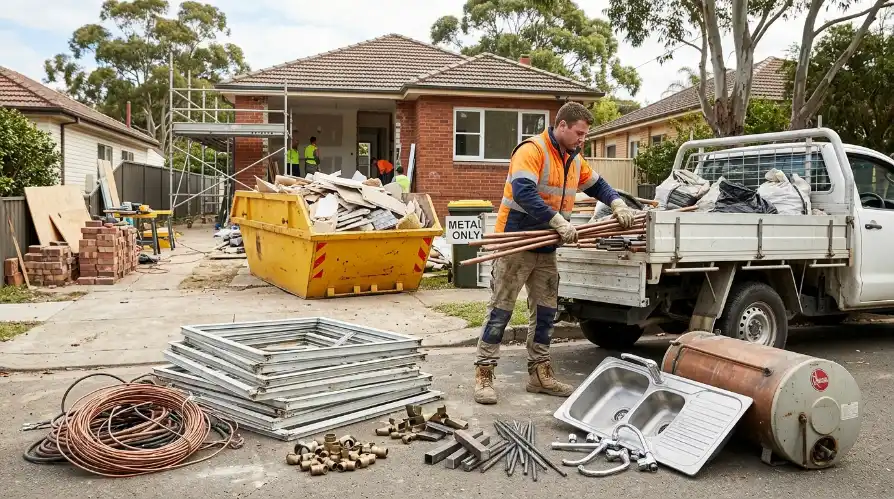
Anyone who has ever been in a half-blown-up kitchen or a stripped-down worksite is familiar with this. A skip bin sits in the street in front of you, tradesmen are pulling the old pipes, brackets, offcuts, and appliance carcasses, and each of them is speeding toward the skip each and every time they work out there. Of course, no one thinks to ask if there are any things here that have any value. The vast majority of the time, it is.
This is a scenario that is repeated with builders, renovators and property managers again and again around Sydney, so here is a step-by-step recap of not so much what should be taken out of the way before your renovation waste is loaded but rather why renovation waste is an untouched item on any job budget.
Mike’s Reno in Parramatta
Mike is a small business owner from Parramatta who currently runs a kitchen/bathroom strip-out company for older homes. One job last year he had was removing some copper pipe, an old hot water system, remounting some aluminum window frames, removing a cast iron bath and a pile of steel offcuts from a structural change. No matter, it went into the skip. When the skip company started getting bills for him for a second bin as it filled up quicker than it should, the owner, Mike, began to wonder how much metal he could have been paid for in that second bin.
He called us for the next job even before the strip-out began. We guided him through sorting the copper pipe and old wiring, the aluminum frames and off-cuts of the gutter, and the various steels and cast iron. Maybe an extra 20 minutes for the crew throughout the task, nothing too crazy; it was just his crew putting stuff in the right pile rather than the next closest bin. We booked the load the same week on site and paid him in cash before we left. His throwaway waste now became money in his pocket, and his smaller skip bin.
In fact, this is really what this article is all about. Demolition metal recycling is not a distinct task; it’s just a different bin.
Why Skip Binning Metal is Money Left on the Table
For skip bins, volume and weight charges apply. Metal is heavy and fills a skip quickly, so when you throw each kg into that skip, you’re doing two, not one, things. You’re paying more for them to pick up, and you’re putting one kg past someone who would have paid you for it, on a renovation or demolition site that works out really quickly on a whole strip out.
So it must be stressed here that not all metal products are worth separating and it isn’t always a ton of money on a small job. However, for projects bigger than a strip out, the recycling value of the copper and lead recovered from the existing roof often isn’t nothing and isn’t too costly additional material to be removed from the trash stream.
What is Considered Construction Scrap Metal That Might Be Cashed In?
Of course not all offcuts are the same, but a lot more of a regular renovation or demolition site does meet the criteria than most people think. The following types of construction scrap metal are typical of the types found on construction sites in Sydney and are worth setting aside:
- Copper: old pipework, hot water system tanks, wiring and cabling removed when doing electrical work. Whatever’s on a typical site, copper always has the highest price.
- Rainwater goods: aluminum window frames and gutters, downpipes, flashing, roofing offcuts and old fly screens.
- Brass: older plumbing fixtures (a common occurrence in pre-1990s houses, such as door hinges and older door handles, as well as tap fittings) – see our brass recycling service for what’s accepted.
- Structural offcuts: structural steel and iron pieces that are cut off when the structure is disassembled; for instance, the reinforcement bar or old balustrades and cast iron baths and sinks are taken from the roofing sheets or steel framing during a complete rebuild.
- Stainless steel: kitchen benchtops, splashbacks, sinks, and commercial fit-out fixtures.
- E-waste and appliances: used hot water systems, AC units, and appliances that have recoverable wires and parts.
A couple of points I would like to make clear, truthfully:
- If the metal is contaminated or mixed, painted, rusted through, or melted down, it’s still acceptable, but typically won’t come with a high price tag as compared to the clean and sorted metal.
- As long as the insulation remains on the cable, it’s ok to bring it as is; you don’t have to strip it at your site.
- If you are not sure, the best way to deal with it is to take a picture, look, and ask before it gets in the skip.
How Scrap Metal Pickup Actually Works on a Site
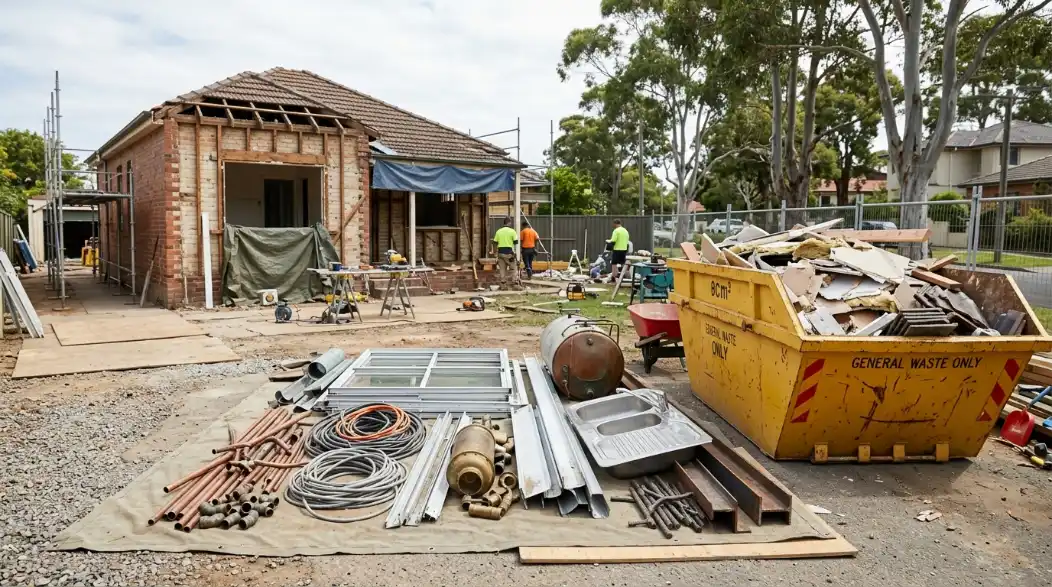
What demoralizes most tradies and renovators, when it comes to separating metal, is the notion that it’s some additional admin, extra trips, or extra hassle they don’t have time for on a live job. In essence, the scrap metal pickup service is designed to fit into a worksite without burdening anyone with extra work.
Here is an example of how it might operate on a “typical” Sydney demolition or renovation site:
- Metallic material is separated as it is being extracted; no sorting is required on site, except into a rough pile or bin.
- You upload images and a basic description of the items, and receive a simple quotation.
- Collections take place at a time convenient to you; as a rule, the same or next day depending on load and location.
- Load weights are determined and measured at the time of arrival, and monies are paid on the spot; no cheques and no waiting period.
If you have a construction business involved in more than a few jobs each month, this may need to become a regular pickup instead of it being a one-off call; a pickup job which runs parallel with the skip bin instead of competing with it. Not sure if a leftover pile is even worth the call? Our guide on scrap metal value explains how to tell before it goes in the skip.
Convert Trash into Gold for Scrap Metals
“ Cash for scrap metal ” is used a lot, and while it may be a bit of a bonus on a renovation or demolition site, it can also be helpful in managing costs. Each and every kilo of copper, aluminum, brass, or steel metal that is measured and collected is out of the skip bin and away from landfill for you. It’s a real number when the strip is built on a tight margin for the builder.
It’s also worth keeping in mind that this also has nothing to do with just the odds of winning. When metal is dislodged from a demolition site and recycled properly, it does not end up in a landfill, is reprocessed into new metal, and retains a truly recyclable resource out of a bin that it doesn’t belong in. That is a significant volume of material diverted from waste on a large-scale demolition project.
How to Make the Most of the Next Strip Out?
The easiest habit to form is a second pile for anything metal, if you’re going to hire a skip bin for any sort of renovation or demolition project anywhere around Sydney. It doesn’t have to be sorted on the job into precise detail categories and doesn’t have to slow the job. The proper resolution is to call in advance or send us some photos first so that we can schedule a collection around your timeframe and weigh and balance to determine the payment amount prior to leaving the building.
Book Your Site Collection
Got a renovation or demolition coming up in Sydney? Before that skip bin fills up, give Metal Max Recyclers a call on 0474 887 007 or send through a few photos. We’ll quote it, collect it, and pay you cash on the spot — get in touch to schedule your collection. Managing metal waste across several properties instead of one? See our guide on scrap metal pickup for property managers.