Metal Max Recyclers
Stainless Steel Scrap Price: What Sinks, Kitchens and Commercial Equipment Are Worth in Sydney
Published October 24, 2026 · METALMAX Recyclers
The café is now closed. The landlord wants the kitchen swept around the end of the month, and you are standing before a stainless steel bench, a canopy as big as a ute tray, and a double sink that tips the scales more than it looks. One possibility is using a skip bin. However, before paying a dollar for trash, the value of kitchen stainless steel may be worth more than what it gets on the recyclables heap; it’s important for you to know the stainless steel scrap price.
So whether it’s a bathroom renovation in Blacktown, a fit-out in Parramatta or a restaurant demolition in Surry Hills, here’s how recyclers value stainless and how you can receive a decent payout.
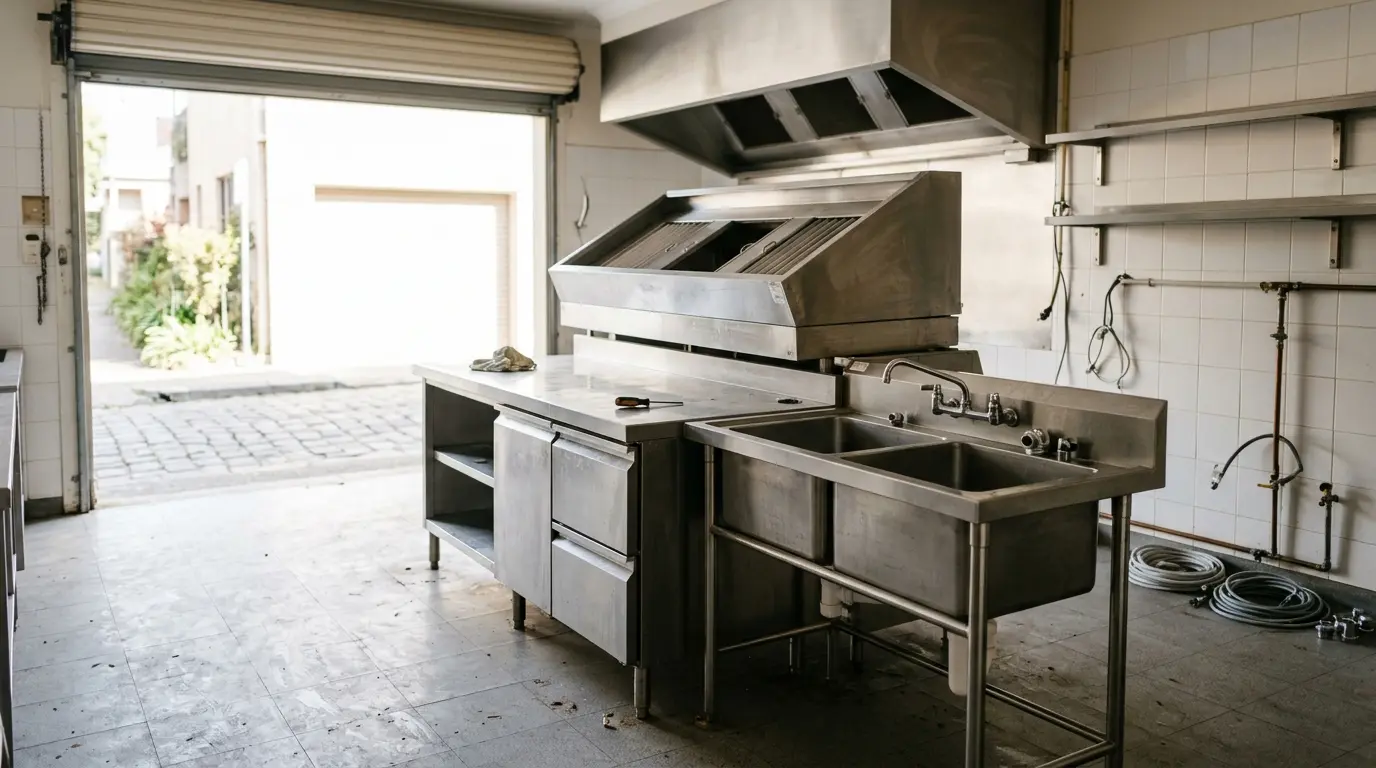
Short answer: NO! Most often stainless steel will sell for more per kilo than non-stainless steel, and sinks, benches and canopies are typically a high percentage of stainless steel. The final number is based on the grade, weight, cleanliness, and the market rate on the day; therefore, get a quote prior to selling if photos are included. If possible, separate a portion into a piece of paper with scrap so you can sort it out.
What are the main influences on the stainless steel Sydney price of scrap?
That can’t be given as a single number, as stainless steel scrap is not one product. A recycler will be interested in:
- Grade. It is the nickel content that really makes the difference. This is true for grades with more nickel content, as well as those that are magnetic, as they tend to be worth more than those with lower amounts of nickel.
- Weight. Weight on the weighbridge, a heavy commercial bench and a thin sink are a class apart.
- Cleanliness. Clean, sorted stainless is more easily valued than a tar heap of food waste, timber, plastic or glass.
- Attached parts. Each one of the motors, wiring, insulation, and fittings is checked separately, or deducted.
- Quantity and access. Whether you are getting just one sink, or a full kitchen stripout, or even installing stairs or collection on the loading dock when space is limited, it’s a different job entirely.
- The market on the day. The prices of stainless steel are constantly influenced by the nickel and the steel market. A quotation is for the day.
Weighbridge 1 (Gross) is the basis. Your load will be weighed and the metal assessed, and a fair price worked out based on the actual weight and content. Metal Max Recyclers will pay you on-site after they’ve weighed and evaluated your scrap.
How to tell 304, 316, and magnetic stainless
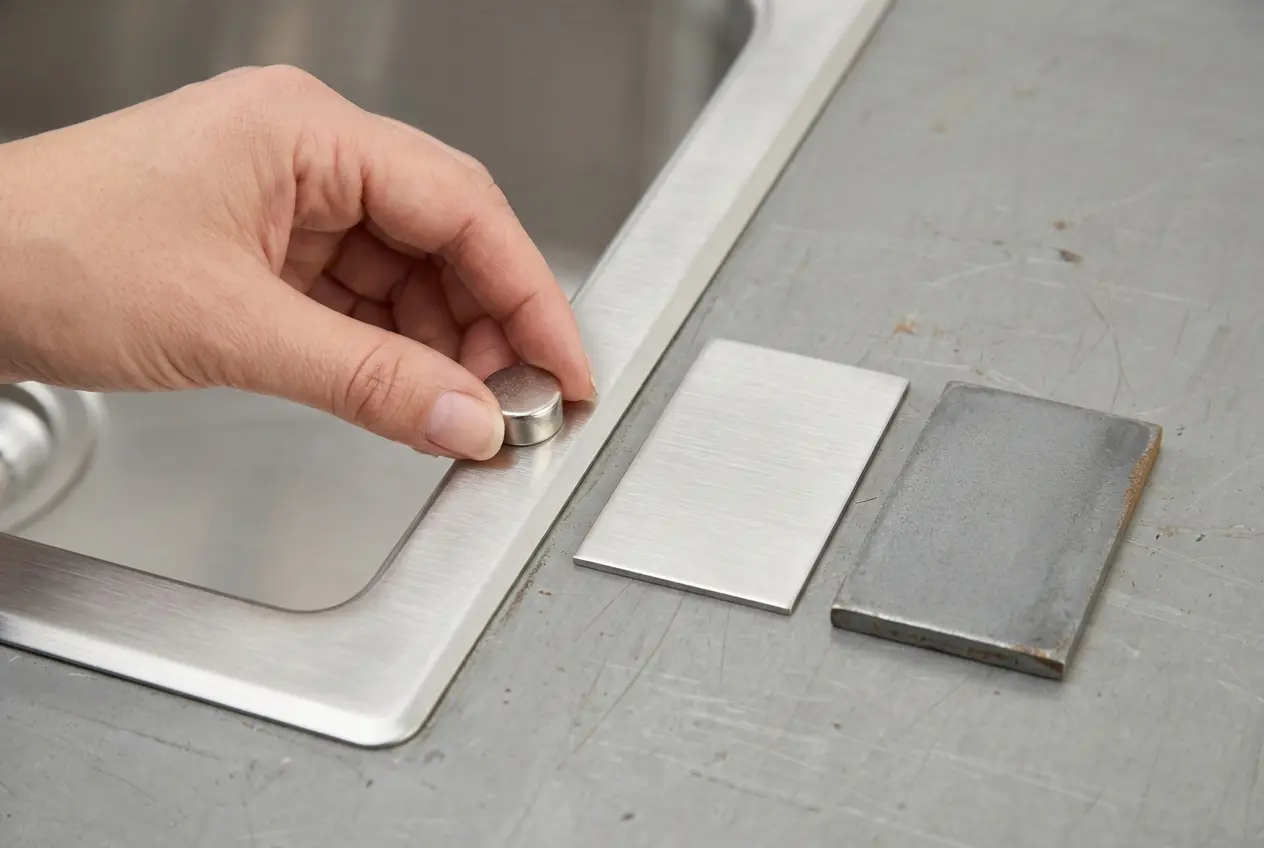
Most commercial kitchen stainless is 304. When the risk of corrosion is greater in general, such as in food and chemical processing and coastal environments, Grade 316 is utilized. For panels on appliances, magnetic stainless (430) is the one that shows up and is generally less valuable.
A fridge magnet is a good approximate measure. Grade 304 is usually non-magnetic or only weakly magnetic, but bends and welds may cause it to be slightly magnetic. It is NOT a laboratory test: Take this as a signal and have the recycler confirm.
So what is the value of sinks, benches, and commercial equipment?
The recycler’s view of typical kitchen items is provided below: These are relative outlooks, not prices.
- Sinks and benches, along with other fixtures that are stainless, will do very well in a kitchen clearance, as will thicker and heavier goods.
- Exhaust canopies and splashbacks: Sheet thickness, fans, lights, and ducting affixed; good when used considerably only for the steel and with removal of any extras.
- Prep tables, shelving, trolleys: mixed frames, castors, plastic shelves; moderate, depending on the amount that is actually stainless.
- Dishwashers, ovens, fryers: It will be able to be broken down into dishwashers, ovens, fryers, motors, wiring, insulation, and always sold as mixed metal, at lower per kilo prices.
- Coolrooms and fridges: compressors, insulation panels, refrigerant. Refrigerants require proper handling.
- Taps and fittings: Water shut-off. Brass or chrome taps are separate, and brass is more expensive than chrome.
Not all items in a kitchen will be stainless. The look of the front is built upon the frame and internals, which can be made of plastic or mild steel, with the silver cover hiding behind.
Steel material products? What can be done to make more use of stainless steel material products?
With a little prep, the outcome could be soaring, and in no time.
- Separate the stainless. Keep it pulled away from mixed scrap. Sorting does help, but isn’t mandatory, says Metal Max Recyclers.
- Remove any ornamentation. Take off taps, glass, timber and plastic where feasible.
- Clean up as much grease and food equipment as possible.
- Don’t attempt to fix, replace or service gas, power or refrigerant systems unless a licensed electrician, gas or refrigerant installer can do the job. Never split any coolroom or gas systems.
- Send pictures and an approximate number. Give size, quantity of pieces, stairs, and tight access.
- Ask what’s included. See if the quote includes the collection, and how you’ll be paid.
There are also some general rates available on the scrap metal prices page, but a load of stainless steel requires the same judgment.
Tradies’ and landowner/manager’s strip-outs for sale
In most cases, strip-outs are subject to a deadline, a lease handover date, or a new tenant or a builder on site waiting for the lease to be up. That’s where a recycler with same-day / next-day pickup (depending on location) changes his tune.
For property managers with multiple sites throughout Western Sydney and the Inner West, the property manager’s guide to scrap metal cleanup provides an overview of how to make the process easy. If you have larger renovation projects, check out what sort of renovation metal recovery you can get rid of instead of throwing away in a skip.
Wait 'Till the Stainless Fees Go Up?
Usually not. Stainless follows the nickel market and steel market, and there’s no one to predict the prices of either with any great degree of reliability. In the meantime, bulky kitchen equipment occupies space, slows down a handover or renovation, and is knocked around!
If there is only a sink or two, and extra space, then just wait. So, when selling is the best option in a full kitchen clear-out, it is typically easier. You can get a quote from a recycler, and then you’ll be able to make an educated decision.
The most frequent errors and warnings to look out for
Mistakes
- It is false to assume that anything shiny is stainless. Not all shiny objects are stainless.
- Unlicensed cutting equipment and/or unlicensed cutting of gas appliances or refrigerators.
- Adding them all together in a heap
- Not obtaining the receipt or the written quote.
Red flags raised by the buyers
- A quote that changes at collection time.
- No clear answer on how they pay
- Labor and/or hidden collection charges
- Did not present a receipt or refused to disclose their identity.
- Impulsiveness to make a decision at the moment
Considerations of funds and time.
Keep in mind both upside and downside. There’s also a hiring fee for a skip bin, and no return is expected for its contents. Labor, time at the site, and the defined handover date are also part of the considerations. Some of those costs can be reduced through recycling stainless, but it will vary according to load. Request a free estimate and shop.