Metal Max Recyclers
How Construction Companies Can Turn Site Metal Waste Into a Revenue Stream, Not a Disposal Cost
Metal offcuts are generated at all building sites, and most building contractors consider them to be waste. They fill the skip bin, pay for it to be taken away, and don’t think about it again. However, all the off-cut steel, reo mesh piled up on-site, and all the aluminum framing behind your site is not rubbish; it’s inventory. A great deal of construction waste could be used to pay for your next skip bin hire, your workers’ smoko, and/or a good portion of your overheads rather than being a cost to you disposing of it.
The shift smart builders are making in 2026 is taking construction metal waste and seeing it as a part of the asset cycle, instead of an item on the disposal invoice.
The Actual Cost of Not Recycling Metals on Site
Few site managers are aware of the amount of metal that passes through them in a building. With issues such as structural steel, copper wiring, aluminum window frames, roofing offcuts, and demolition waste, tonnes of recyclable metal can end up in the yard even before the fit-out has begun in a mid-sized commercial job.
It’s not the value of the item; it’s logistics. Sorting metal from the general waste adds time, takes up limited storage space, and for most crews, the focus is staying on schedule rather than separating waste. That means the metal ends up in a skip, gets sent to general waste landfill, the builder pays for the weight, and the value of the metal is handed to whoever moves the landfill contract.
That’s the part worth stopping on. Waste metal carries real market value. Copper, brass, and Aluminium are all commodities with active buyers. If it’s blended in with general waste, that value is lost. Let it be separated and collected right, and it’s money back in the business.
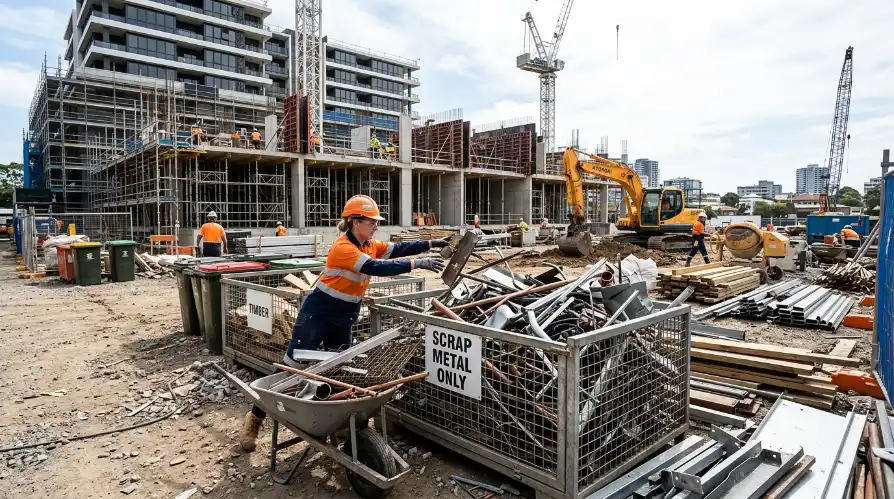
A Case Study Worth Repeating
A mid-sized residential renovation business, servicing Western Sydney, used to run only two general waste skips for offcuts, old pipes, and demolition metal on all their jobs. They had started incurring high disposal costs, and no one on-site was in a position to tidy it up.
Keeping just one scrap metal collection Sydney cage bin on site, the team began collecting copper pipe, aluminum frames, structural off-cuts, and old catalytic converters from site vehicles. A scheduled collection crew came out, weighed it, and paid right away. That one measure generated an ongoing disposal benefit over the one-year accounting period, roughly a third reduction in the volume of general waste that needed to be disposed of. Senior management didn’t change the team, just the habits.
This is the situation on most building sites in Sydney. There was always some waste there. It just needed a channel.
The Important Steps to Take in Establishing a Metal Recovery Site
You don’t need to make a huge change in how you run your business to make a good buck out of your waste. It’s all about regular, small behaviors that any site supervisor can implement every week.
- Place a metal-only bin or cage by the access point to the site, to prevent offcuts from getting deposited in general waste.
- Get a better deal by separating where you can – copper, aluminum, and steel are priced differently, and rough sorting on site rather than mixed loads will get you a better price. Going further and stripping insulation or coatings isn’t always worth the crew’s time; see our guide on scrap metal processing before you decide.
- Don’t stick to one-off calls, particularly on longer jobs, but take regular calls to collect the metal; this avoids building up piles that could become a fall hazard.
- Teach the crew what counts – offcuts are anything that can’t be used anymore, old fittings are anything replaced during the job, and scraps cover damaged tool parts, wire, and debris from broken fixtures.
- Monitor weight and pay per job so your finance team can easily measure it.
No slowdown is felt on the build because of this. It’s a five-minute habit change, and the pay-off shows on the first collection.
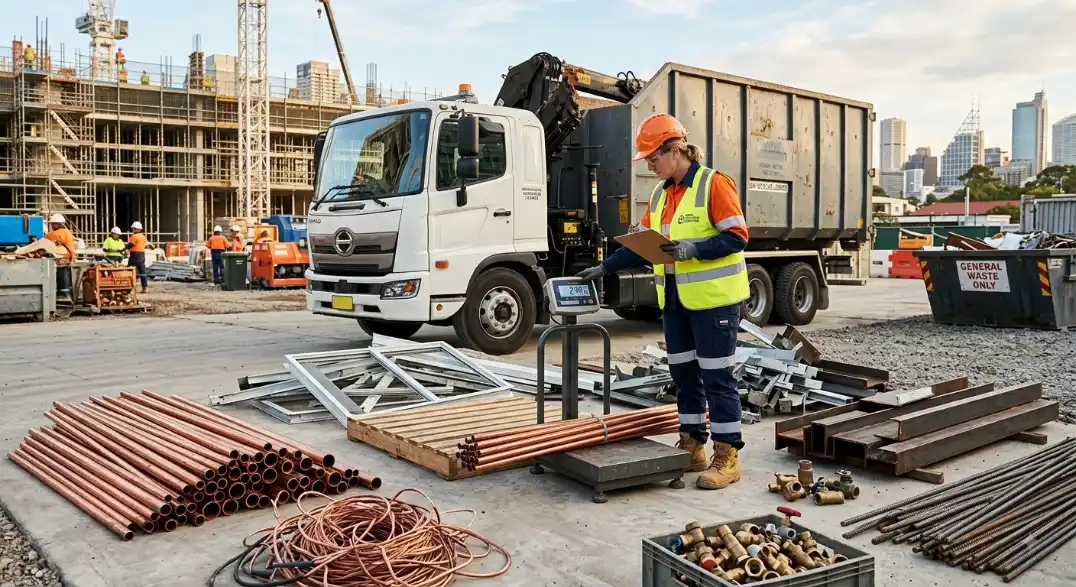
Why It Makes Financial Sense to Sell, Rather Than Dump
This hidden aspect of navigating disposal and recycling is one that’s commonly overlooked: disposal and recycling aren’t the same step. Generally, waste contractors will take metal to landfill, which comes at the cost of paying by weight for others to deal with it. But if you sell your scrap metal for cash to Sydney’s scrap metal buyers, you get the opposite outcome – you’re paid based on the weight of the metal.
If you’re a builder with several sites, that differential adds up quickly. It may seem like just a few hundred kilos of copper wire or aluminum frame from each project, but a year of jobs means a significant volume, and it can make a tangible difference to equipment, fuel, or clean-up costs. Since metal prices fluctuate with market conditions, timing bulk collection during periods of higher prices can increase the payout.
There’s also a compliance angle worth considering. Responsible waste practice is increasingly required by councils and developers as part of project sign-off. Finding a licensed recycler that provides a documented and eco-certified disposal trail with construction metal recycling is a valuable tool for compliance, as well as for any sustainability policies or claims made to clients.
Making Precautions Part of Standard Site Practice
This isn’t about doing something complicated: it’s simply about standardizing metal recovery into the process. That means:
- Briefing subcontractors before the job begins on where metal offcuts are disposed of, to lower the risk of harm.
- Writing collection contact numbers on the site whiteboard so others can find them in the event of a build-up.
- Anticipating the effects of major demolition or strip-out periods and scheduling pickups around those high-volume windows.
- Reviewing payouts, like any other job cost line, as part of the regular reporting.
Once it becomes part of the routine, it doesn’t need to be remembered by the site manager – it just operates on its own. Overseeing more than one build at a time? Our guide on scrap metal pickup for property managers covers how to keep collection consistent across multiple sites.
Final Thought
There was never any waste in the metal piled in a skip bin, waiting for somebody to notice it. Sydney builders are turning recycling into additional income by separating it, collecting it, and transporting it to a reputable recycling partner, job by job, instead of treating scrap as a cash-hole line item. If your site still regards scrap as rubbish, it might be worth checking what exactly is gathering behind the shed.
Book Your Site Collection
Ready to stop paying for what your site can sell? Metal Max Recyclers offers same-day scrap metal collection across greater Sydney, with on-the-spot payment for building site metal waste. Check today’s scrap metal prices or get in touch to set up a collection schedule for your next project. Not sure what your load is worth first? See our guide on getting an accurate scrap metal quote by phone or photo. Curious why copper and other metal prices have been climbing lately? Read our breakdown of metals in high demand from data centers and clean energy. Mid-renovation instead of a full build? See our guide on renovation scrap metal worth cashing in instead of skip binning.