Metal Max Recyclers
Is It Worth Removing Insulation, Rubber, or Plastic From Metal Before Selling It?
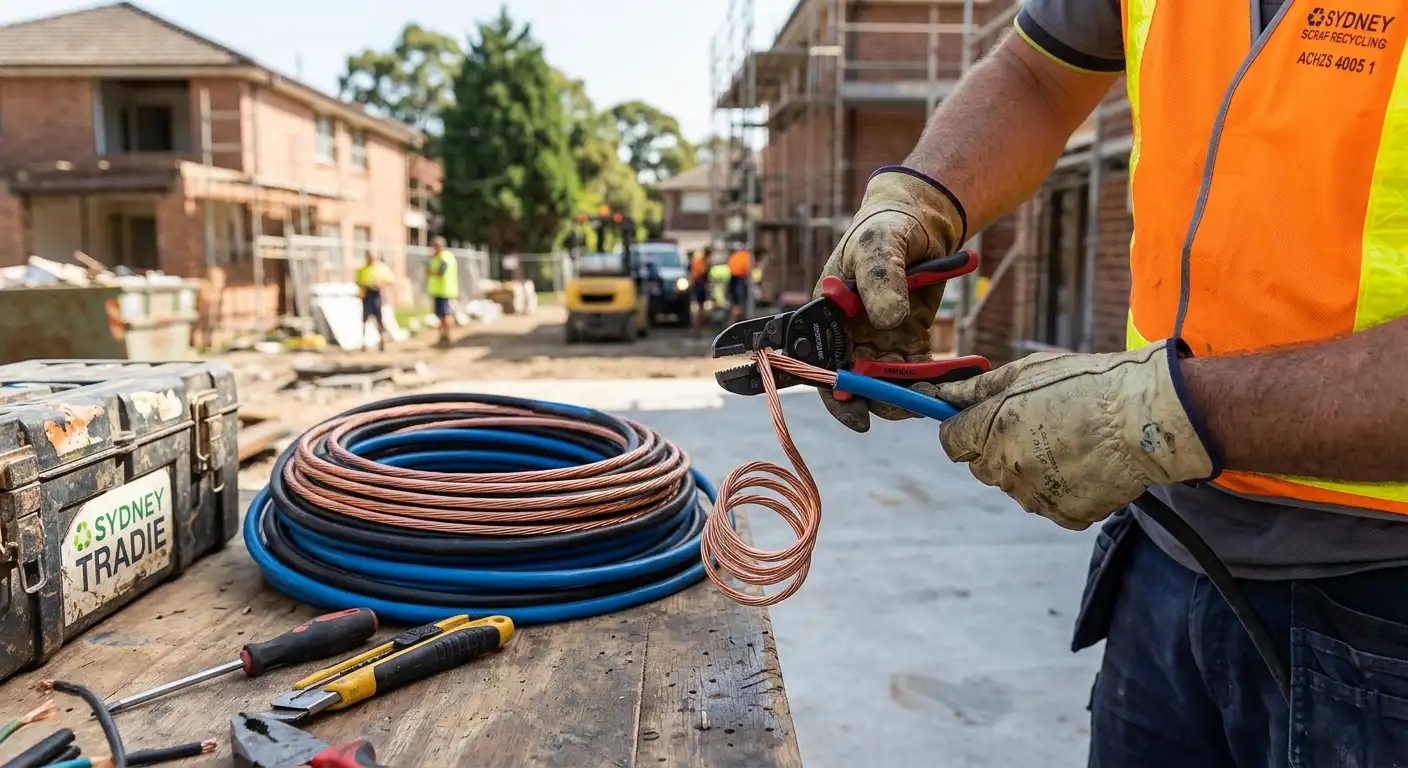
Chances are, you have from time to time asked yourself, “Should I take this apart first, or work with it as is?” for anything from a stack of old wiring to pipe fittings to car parts. It may sound like a simple choice, but it would be one of the more common questions we get asked from tradies and construction workers throughout Sydney on a weekly basis and even daily, who produce this kind of mixed scrap.
It all depends on the metal, coating, and how much of your time you have to spare that you can devote to getting a better payout. The longer answer is a little more interesting as far as I’m concerned, and perhaps you should understand beforehand before you start your Saturday with wire strippers, so you don’t end up being the one for nothing.
The Site Manager Who Took Two Hours To Strip The Wrong Cable
We were once called in by a site manager of a commercial fit-out in Blacktown that was a little on the sour side. His crew went through the better part of a two-hour laborious operation with plastic removed by hand from a big coil of electrical cable, convinced it would double its payout when “clean.” Upon arrival and weighing of both the stripped cable and a separate coil that would have remained in the ground, there was barely enough of a difference between the two prices to warrant the three people and two hours of labor to strip the cable.
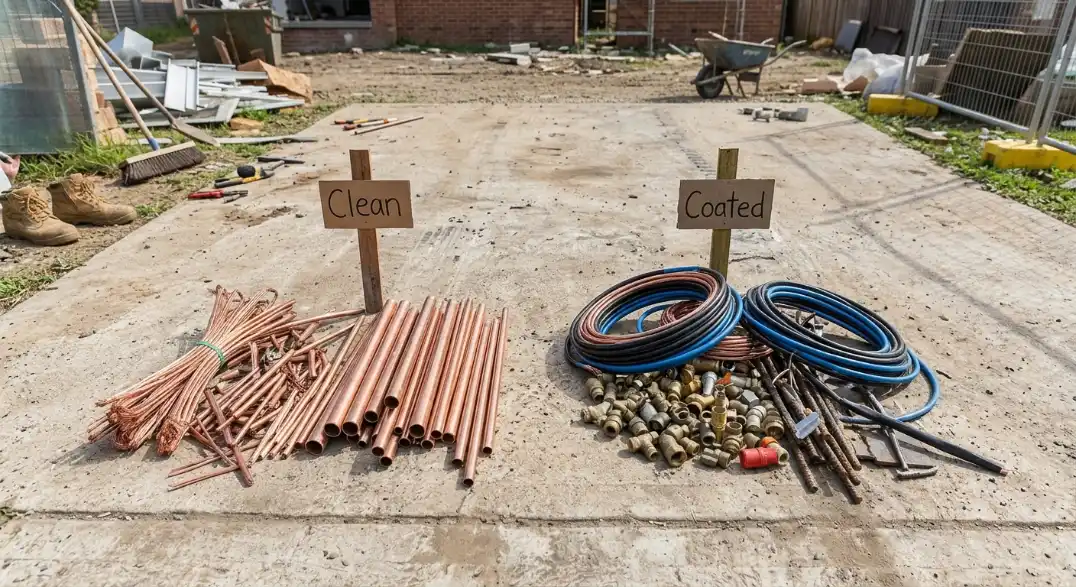
The actual situation was one of effort vs. metal type, a mismatch. The cable was one that had a relatively low amount of copper per kilo of insulation, and stripping the insulation for extra copper cost more than it was worth. There was, however, a pile of clean copper pipe jumbles that had none of the coating on it, and that was moved for a noticeably higher rate, because no processing had to be done here.
That proved to be a good educational experience for the site manager and the same lesson we pass on to most clients: stripping is not always useful, and the use of certain materials would enhance the return.
Insulation, Rubber, and Plastics Have an Effect on the Value of Scrap Metal; Why?
Recyclers will not reject coated metals or contaminated metals, but the values will vary depending on the additional processing needed. Assuming that any rubber, plastic, or insulation is attached to the cable, piping, or fittings when they arrive at the Recycler, the material must be removed from the metal before it can be melted down for use again, which requires time, labor, and equipment on the part of the Recycler.
There are different methods for calculating weight: coated metal may be priced and weighed as a lower grade because it is not all metal.
- Scrap metal quality is impacted by purity: Unattached plastic or rubber may lower the metal grade, leading to lower value per kilo. Good quality scrap metal with no attached plastic or rubber can be sent for a better grade and a higher price per kilo.
- There is a cost generated in processing time: A metal processing facility that can efficiently strip the insulation from many tons of metal can do a little more work and strip a small scrap pile efficiently as well, but there is a price.
- Not every coating is the same: A thin lacquer or paint finish makes little or no difference to the price; a high insulation level or molded plastic case makes a difference.
This is indeed the essence of the question. The value of it isn’t that dirty or coated metal itself is worth nothing; it’s that, at the price they are offering, somebody had to clean it first for it to move on to the next stage.
When the Removal of Rubber or Plastic From Metal Is Profitable
It’s where the rubber is removed from metal or metal from plastic that taking the time to do so really matters, and normally it’s the value of the underlying metal.
The most obvious is copper. Just a little of the insulation removed from a large coil of wire can greatly affect the payout, as copper has a high per-kilo value and some scrap yards have deductions for wire that has been stripped. Most of the brass fittings that are installed in plastic enclosures, old motors with copper windings, and catalytic converters with exposed plastic on a vehicle are in the same class of metals, and a little preparation is worthwhile to harvest the copper from these types of metals.
Otherwise, low-grade steel, aluminum framing and plastic trim, or other types of appliance scraps don’t really warrant the labor. In most instances, a recycler can do a more efficient job processing it in bulk than someone could by hand, and the base metal isn’t worth it by itself, on a per-kilo basis, to warrant the time.
Before You Begin Stripping, Consider This Simple Method of Determining Your Decisions
Before reaching for a knife or a wire stripper, it might be helpful to ask a few questions to help determine if it’s worth your time.
- Is the metal of the base copper or brass? The metals that are usually the most worthwhile to clean for a financial return on the investment are these.
- What is the true amount of coating scale? The cost of taking out a little plastic packaging may not be worth the trouble, but there are times when the removal of a large roll of insulated cable may be worthwhile.
- Have time to spare? For a marginal price increase, it may make much more sense to sell a load as it is, and then use the time somewhere else.
- Is it a process that can be done by the recycler? Most of the established recyclers get the processing of scrap metal done in-house, which also helps them to get the best bargain from you without you worrying about the processing.
This is especially significant for construction companies. For a site that makes scrap daily, it’s not worth their time to catch all those offcuts; plus, recycling costs are already a factor, and you just want to save on using man-hours for them.
At METALMAX Recyclers, We Prioritize the Recycling of Mixed and Coated Scrap
This kind of assessment is a part of what we do every day. Weighing, sorting, and grading of a mixture of coated or insulated metal and clean scrap metal are performed on site, avoiding the guesswork of having to decide whether or not to strip coated or insulated metal. If the removal of plastic or rubber will be beneficial to a load of the plastic that is to be collected, we will mention this and let you know of the difference in cost; however, for most loads, plastic can be removed by our processing equipment far more effectively than it can be done manually.
This is of benefit especially for construction and demolition jobs, as the scrap material may come in one lot consisting of copper, steel, aluminum and coated cable simultaneously. Instead of having to sort by yourself before it’s picked up, clients can submit photos and receive an authentic assessment from us on what is worth preparing and what isn’t, and we will take care of the rest.