Metal Max Recyclers
Scrap Metal Recycling: How Much Energy Does It Really Save?
What is the amount of energy saved in recycling metal rather than mining new metal?
To summarise: There is typically a substantial amount of energy saved in recycling metal, particularly around 95% for aluminium, 85% for copper and 60-70% for steel. That is, recycling a tonne of metal on a construction site in Sydney, by avoiding landfill, diverts one tonne of energy, water, and raw ore from being mined, hauled, and smelted to make a new tonne of metal.
So if you’ve ever pondered whether it’s always important to drop off some offcuts of steel or aluminium – in a ‘skip’ – then let’s say the short answer is – yes, but probably in a manner not most people realise.
A Quick Story From The Site
What follows is a brief story of one of our project managers closing out a mid-rise renovation in the Inner West a couple of months ago. As always, there were some metal beams, aluminium windows, and copper wiring cuttings left over from the site’s construction. So it was thought best, and this was the client’s first thought: to have it all skipped and dumped, principally because no one on site knew where to take it or even whether it was worth the effort.
After we explained to them the reasons for having a dog altered, their view reversed. It was “waste” that was valuable. When taken to a certified recycler, the steel saved enough energy to power the equivalent of eliminating the emissions from several cars from the road for roughly a year. The client also recovered some of the project costs when they sold the scrap, and they felt good knowing the material wasn’t just being dumped in the landfill. One conversation led to the inclusion of scrap metal recycling in every project plan from the outset.
Make sure you use a dustbin that is secure to close.
The extraction of virgin metal requires devastating and energy-intensive operations. Ore needs to be blasted out of the ground, transported over long distances, crushed, and then roasted or heated at very high temperatures to extract the metal from the rock before it can be used. All those steps consume fossil fuels and energy.
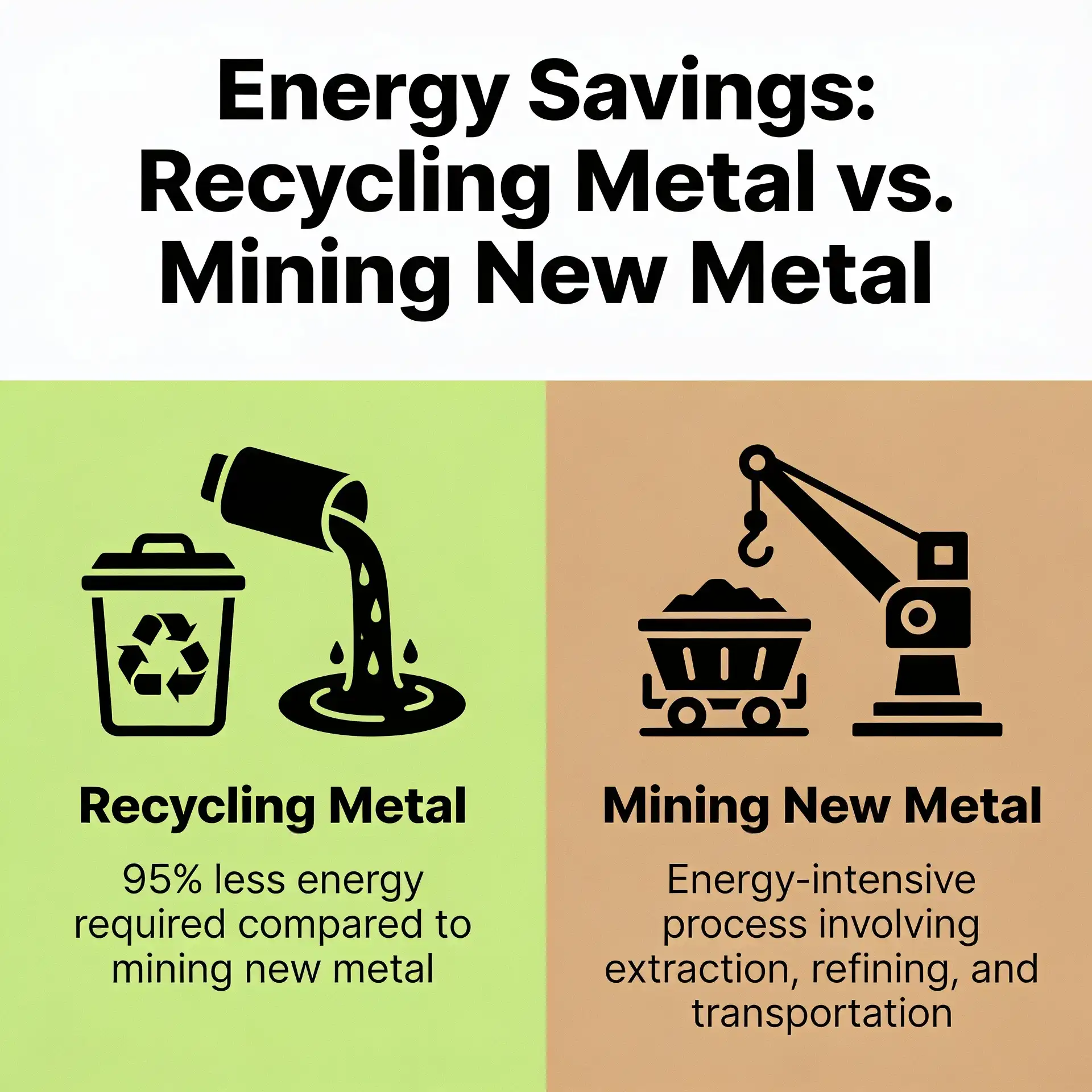
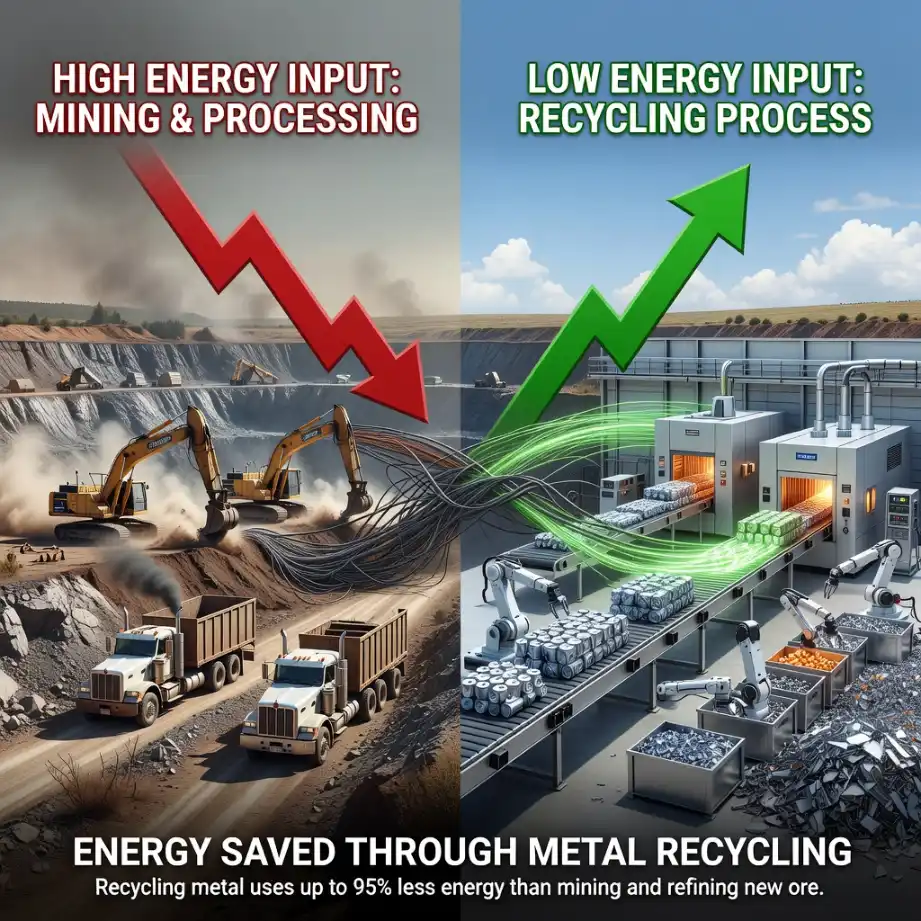
That is almost totally eliminated by recycling skips. Nuts and bolts, bearings, etc., are already cleaned and refined; all they need is sorting, cleaning, melting down, and reshaping. The energy savings are up to 95% for aluminium, approximately 60-70% for steel, and around 85% for copper (the actual figures vary according to the virgin production system type). These are not rounding errors… It’s a big difference in fossil fuel consumption, carbon emissions and costs.
In other words, 95% of the energy required to reduce aluminium to its primary elemental form is recovered when it is recycled. This is equivalent to roughly 21 barrels of oil saved per tonne of aluminium recycled. If you then multiplied that figure by all construction sites in Sydney disposing of aluminium window frames, cladding and ductwork – the scale would be very large.
Here are some facts to know about metal recycling
I’d like you to pay attention to a few numbers that surprise folks when they hear them while we are on site:
Recycling steel conserves approximately 2,500 lbs of iron ore, 1,400 lbs of coal, and 120 lbs of limestone per tonne of steel recycled.
The copper recycling process can reduce water use by up to 90% compared with virgin copper mining and refining.
The energy saved by recycling the U.S. nation’s metal is believed to be sufficient to power nearly 20 million homes for an entire year.
Some of the best materials to recover from a demolition or refurbishment site are metals such as steel, aluminium, and copper, because they can be recycled indefinitely without compromising their structural integrity.
They’re not technical “footprints” in the environment; they’re about reduced project carbon footprints, meeting green building codes & targets, and even cash back from scrap buyers for a construction business.
The Metal Recycling Process, Simplified
When many people think about recycling metal, they think that it is so complicated. But in fact, recycling the metal isn’t that complicated once they learn the steps.
The first place scrap is collected is at the site; this can include structural steel offcuts, copper wiring, aluminium frames, or old plumbing. The metal is then separated by type ( ferrous and non-ferrous) as they are treated differently. The sorted scrap is then cleaned to remove any other non-metals such as paint and coatings. This is then broken into pieces or baled for easier processing, and subsequently melted in a furnace and cast into raw material forms. That raw material is transformed into recycled metal products that are used to make everything from new beams to car parts to household appliances.
The very thing a construction company has to take away from this is that if they remove the metal portion from their trash, rather than disposing of it with the general junk, the entire downstream process is quicker, cleaner, and more valuable.
The fundamental question is, which method is more environmentally friendly? Metal recycling vs metal mining – which is the real comparison?
Comparing recycling metal to mining metal isn’t a good idea: they’re quite different.
Energy use: The extraction and smelting of fresh ores are among the most energy-intensive processes on earth. Recycling avoids the extraction and initial refining of the material entirely.
Disruption of the land and waterways, and environmental damage are often felt long after mining operations are completed. A much reduced footprint exists for recycling.
Emissions: Overall, lower energy consumption reduces fossil fuel use across the supply chain, resulting in lower emissions.
It will likely be less expensive to produce material using recycled metals, and scrap will have some actual resale value.
None of this is to imply that the industry of mining will come to an end, for, after all, some new metal always has to be found. However, one tonne diverted from a landfill to a recycler equals one tonne that didn’t have to be extracted, processed and transported.
This is important for Sydney Construction sites for several reasons.
Metals constitute a considerable waste stream from the construction industry in Sydney annually, at both large and small scales, ranging from residential remodelling to major commercial projects. As sustainability criteria are becoming part of Council approval applications and client requirements, it makes sense for recycling to happen on-site, and it is now expected.
We are a Sydney-based construction company and have witnessed firsthand the effects that a well-designed scrap metal recycling plan can have on the outcome of construction projects. It helps lower the cost of the skip bin, keeps the site cleaner, maintains green building certification, and, by the way, can save the client money through potential ‘scrap value’. It’s one of the most significant sustainability accomplishments one can make on a job site, and there’s no need for extra equipment or significant changes to crew operations.