Metal Max Recyclers
Bare Bright vs No.1 vs No.2 Copper: What Grade Is Your Scrap?
Published November 9, 2026 · METALMAX Recyclers
Old plumbing removed during a remodeling job, or garbage heaped after you swept the shed, and there’s a heap of copper in the garage. The ideal yard is saved on the one yard. Another offers half. Why?
Typically, it’s a grade situation. Scrap copper isn’t one product. Bright No.1 and No.2 copper are quite acceptable for the same batch and price drastically different. The post will outline how they can differentiate, how to organize your scrap copper before you call, and how to get a fair quote. Since 2008, we’ve handled and recycled metal in Sydney every day, so these are pretty regular sights.
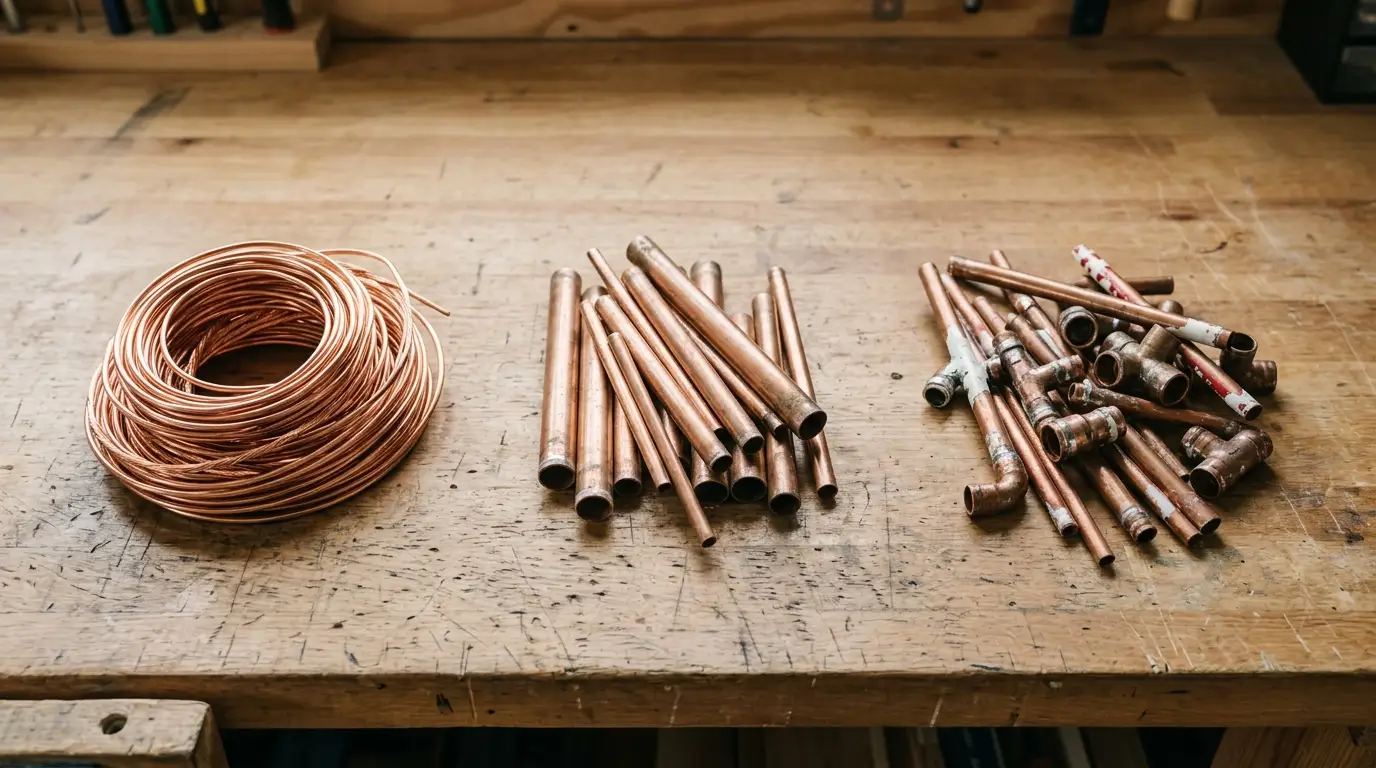
Quick Answer: The best grade is bare bright copper; it is clean, bright copper wire that has not been coated. No.1 copper is clean, unalloyed copper pipe or wire which may tarnish, but has no solder or fittings. No.2 Copper: This is the thinnest, or the copper containing solder, painted, or fitted to it. The cleaner the copper scrap, the higher the grade and the higher the price.
Which types of copper are called scrap?
The grades are based on the nature and purity of the copper that is clean, thick, and pure. The more it is clean, the less the refinery needs to do, and thus the more money it won’t earn. Each grade in the school may have slightly different definitions for yards; however, the basics are the same.
Bare Bright Copper
Bare bright is the best grade. Uncoated, fine alloy-free, thick wire (usually 1.3mm/16gauge or thicker), unalloyed, with no insulation, solder, tinned, and no tarnish. It appears to be quite bright and fresh, as fresh as a new coin. It is usually found in the insulation of Naked (for domestic usage) wires.
No.1 Copper
No.1 copper is unalloyed wire, pipe, tube, or bus bar, which is at least 1.6mm thick, clean copper. It may be dull, tarnished, or lightly oxidized, but should not contain any solder, paint, insulation, fittings, or heavy coatings. A common one is cleaning off-cut plumbing.
No.2 Copper
No.2 copper is admissible, “good but not perfect.” It is the same type of copper, but thinner, painted, tarnished, or has solder joints or light coatings. Typically, pipes with soldered fittings come here. It can be used with benefits and costs less than No.1 copper.
Bare Bright vs No.1 vs No.2 Copper: Side by Side
A comparison of the three grades is presented in this table.
- Bare bright: Shiny, uncoated wire with no insulation or tarnish. Highest.
- No.1 copper: Clean pipe, tube, or heavier wire (may be dull). Lower than bare bright.
- No.2 copper: Painted or tarnished copper pipe (with soldered joints), or thinner pipes. Lower.
The details about how to home grade copper.
Special equipment is not required. Try this first before calling:
- Check the color. Clean copper is bright pink-orange metal. Surface oxidation happens when it is green or brown.
- Try a magnet. Copper isn’t magnetic. If the magnet adheres, there is steel attached.
- Arrange a secret place. Organize a hiding place. Copper is reddish pink in color; brass is yellow.
- Search for materials like solder, fittings, paint, and insulation. These are used to push copper down a grade.
- Sort by grade. Store bright, No.1 & 2 copper separately in bins or bags.
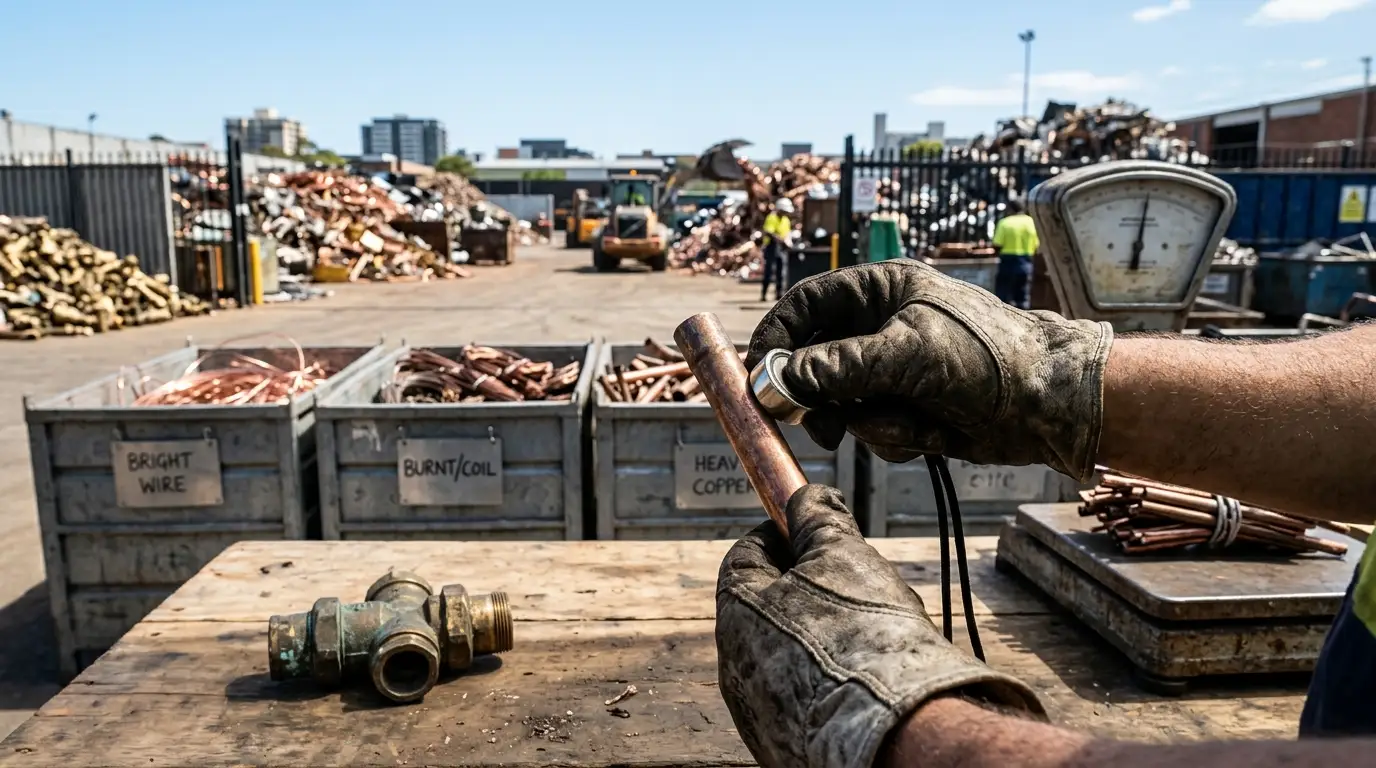
When in doubt, give us photos and a description, and we’ll provide you with a quote.
Sydney Homes: Scrap Copper, what is it?
The types of items in your pile vary with local conditions:
- In suburban areas near the sea, some copper develops a greenish patina that is caused by exposure to coastal salt air. It is oxidation on the surface, and the metal below it is more often than not of good quality, although it can cause some copper to be pushed down a grade.
- Homes constructed in Sydney’s old buildings may contain older pipes and hot water systems that include copper, a great resource for renovating.
- Copper pipes and coils are found in air conditioners. Recover the refrigerant first before taking it off, by a licensed technician.
- Typically, electrical cable will be insulated, which means it will cost more than the same bare wire.
Factors that Impact Cash for Scrap Copper?
There are a number of things that will have an impact on how much you earn:
- The most important is the grade and cleanliness.
- The heavier the copper, the more return will be made.
- Poor Connectivity, e.g., steel, brass fittings, solder, insulation, reduces value.
- Market price: price that fluctuates depending on the day, changes as the market requires.
The brightest copper usually will be the highest price, as it requires the fewest processes. Look at our prices page for up-to-date pricing, and remember that payment is made after weighing and assessment of your load has been made.
The most frequently made errors in these types of documents are:
- Averaging grades all in a single pile.
- Failure to remove the steel/brass fittings from the copper.
- Cutting axes from electrical insulation off cable (and it is generally not permitted in NSW), as it emits poisonous fumes.
- Acid polishing/cleaning: don’t increase grade.
- So perform these steps when handling cables that can still be energized: Disconnect the power supply and then use a licensed electrician.
LCC puts a price tag on stripping in terms of cost and time.
Insulation can be pulled down in small quantities, but is slow when done by hand and will make the wires bright when the work is done. If you have a large load, please give us a call and obtain pricing for insulated wire versus a bare bright prior to stripping.
Sydney-wide and usually same or next day, scrapped copper is collected free of charge, subject to a minimum; please see details.
Not sure it’s copper at all? See how to identify scrap metal before you sort.