Metal Max Recyclers
Magnet Test, Scratch Test, Spark Test: How to Identify Unknown Metals
Published November 16, 2026 · METALMAX Recyclers
In Blacktown or Merrylands, you have patched a shed or cleaned up a family member’s garage, and now you have a huge pile of metal sitting out on the front lawn. Some of it is just plain steel. A Recycler will value some of them differently; they may be copper or brass.
It’s not advisable to need a lab to figure out what is in play. Test it all the way by using a magnet, a knife, or a key, and it takes only a few minutes. This guide discusses the methods that can be used to identify the metal as a “scrap metal” value, explains what each test can NOT tell you, and explains what we see when metal comes to our St Marys yard.
Here’s the short answer: Begin with a magnet. In this case, it will stick, and it is iron or steel. If it does not, then you have scratched a hidden spot: red-orange = Copper, yellow = Brass, soft, silver-grey = usually Aluminium. Do not perform a spark test unless you have a grinder and are familiar with safety fundamentals. No one test is definitive; use two or three.
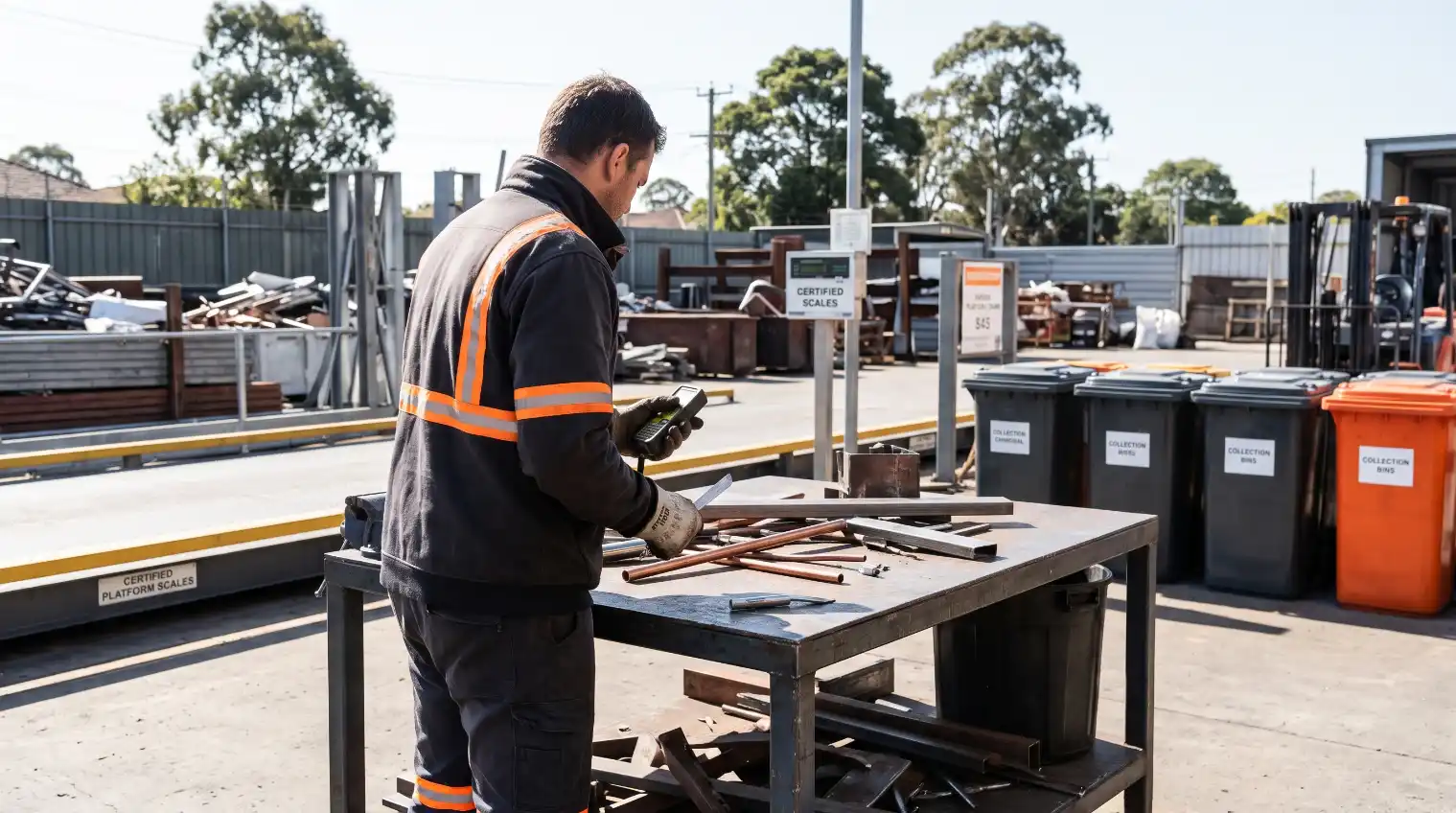
Identify Scrap Metal By Using Your Eyes and Hands!
Look and lift before any tests. Color, weight, and the source of the thing narrow that down.
- It is common for pipes underneath a house to be copper.
- Old engine blocks are typically cast iron, as they tend to be heavy and dull.
- Windows, gutters or a light silvery wheel are typically aluminum.
- Many taps, keys and fittings are made of brass.
Next, try the metal testing method listed below, which is quickest.
Test 1: The Magnet Test
This is the quickest method to divide a lot of metals into ferrous (iron-based) and non-ferrous.
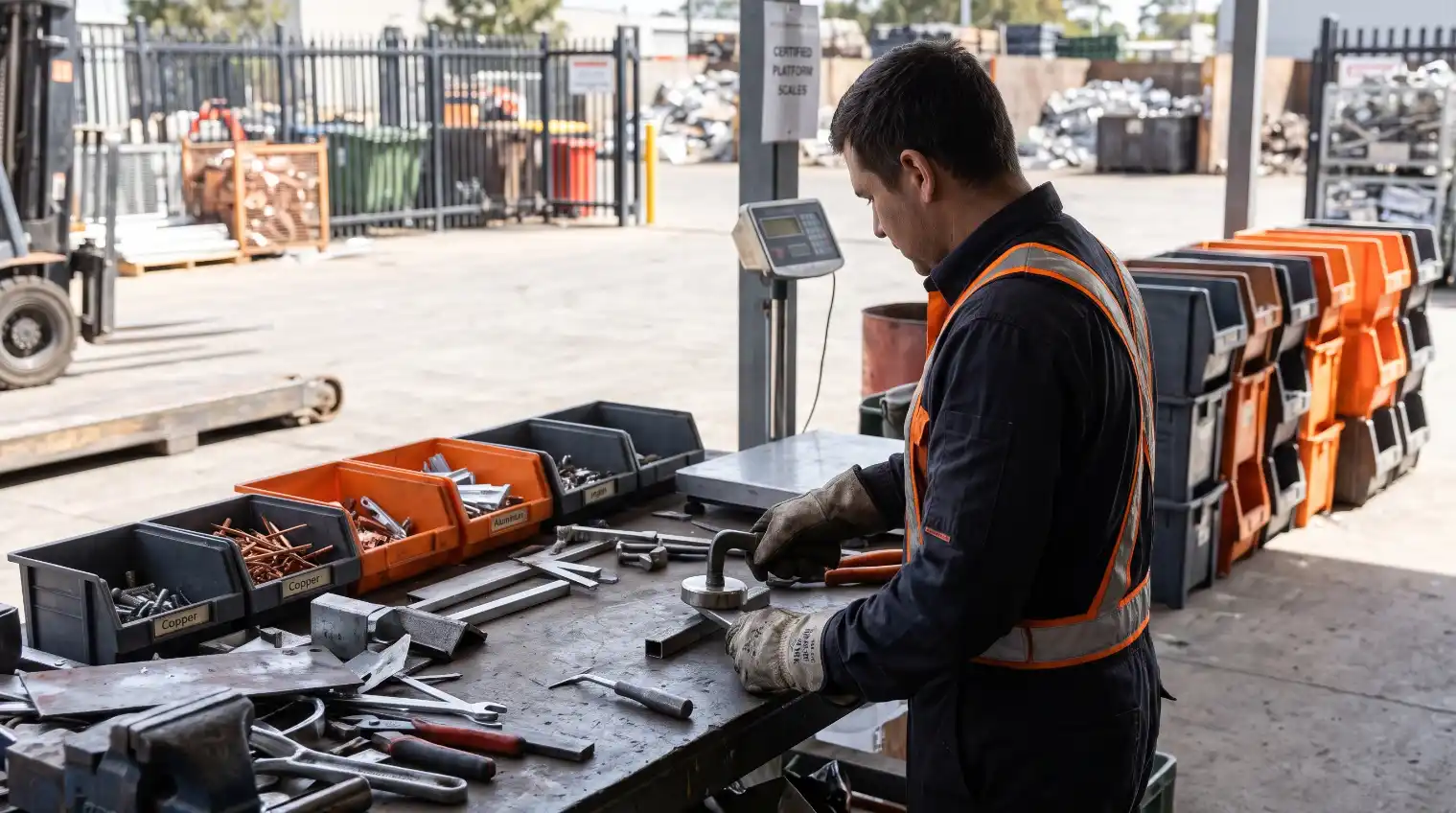
- Clings strongly: certain stainless steels, certain alloys’ chemical composition, iron, mild steel, cast iron
- Doesn’t stick: aluminium, copper, brass, lead, zinc, most common stainless steel
Use a good magnet and not a fridge-type magnet.
Test 2: Scratch Test
Choose an area where nobody will be able to see the scratching and make a scratch with a file, knife, or key. When tarnished or painted, or corroded with old metal, get down in there to reach the clean metal.
- Reddish-pink: copper
- Yellow-gold: brass
- It is soft, silvery-white, and it marks easily (aluminium).
- Reddish brown, very dull, gray: lead
- Steel or stainless steel, hard, bright grey:
Hardness helps too. Aluminum, copper and brass scratch much more quickly than steel.
Test 3: The Spark Test
Spark tests of metal involve touching the metal to a running bench grinder, while checking the sparks. It is the most complicated of the three tests and is the only one that can be used to distinguish different types of steel.
- Yellow-white, long, slim streaks: Mild steel
- Cast iron: short and dull orange sparks
- The number and length of sparks are reduced: stainless steel.
- Aluminum, Copper, Brass: basically no sparks
Safety first. Provide eye protection and gloves; keep away from flammables. Never grind anything that you feel might be magnesium, as it burns violently. Avoid grinding lead as it contains toxic dust. Do not test gas bottles, batteries, or a sealed container. If you’re not sure, you can also leave this test and use the other two.
A Table of Metal Types and Test Results
Use this as a quick reference guide.
| Metal | Magnet | Scratch colour | Spark test |
|---|---|---|---|
| Mild steel | Sticks | Bright grey, hard | Long yellow-white streaks |
| Cast iron | Sticks | Dull grey, brittle | Short orange sparks |
| Stainless steel | Depends on grade | Bright grey, hard | Few, short sparks |
| Aluminium | No | Silvery-white, soft | None |
| Copper | No | Red-pink | None |
| Brass | No | Yellow-gold | None |
| Lead | No | Dull grey, very soft | Don’t grind |
Learn how often these metal types occur around Sydney.
Sydney scrap arises from a couple of spots, and each has its own everyday practice.
- Around the house: copper pipes and wiring, brass fittings, aluminum windows and gutters, and steel sheeting and frames.
- On worksites: offcuts, cable, rebar and mixed loads, from Parramatta to Penrith.
- Car: steel panels, cast iron or aluminum engine parts, alloy wheels, copper radiators and wiring.
The magnet test earns its keep on a car. Rest against an engine block or cylinder head. If it sticks, then it’s iron. Otherwise, it will probably be aluminum.
What does a Wrecker see when the car would be a “Wreck”?
If someone calls regarding a vehicle, we do not test every part using a magnet. Several considerations were put forward for the points where they began:
- Weight. The basis is the car’s weight in tonnes, measured on a weighbridge.
- Completeness. The stripped car is very different from a car stripped down.
- Catalytic converter. It is only valuable when it contains precious metals; to identify which ones, no magnet or scratch will help. Please don’t cut one open to check. Our catalytic converter recycling team determines these appropriately.
- Wheels, radiator and wires. Alloy wheels, radiators and copper wiring are collected separately.
- Access. Does the tow truck have easy access?
Condition matters too. Salt air, Bondi and Cronulla, or the Western Sydney summer sun are so corrosive that cars corrode more quickly in these locations! Surface rust will not affect the metal, but must be removed in order to test. Our car wrecking page has more about the way we take care of cars.
Mistakes to Avoid When Testing Unknown Metals
- Trusting one test. Stainless steel can’t be separated from the brass-plated steel by the magnet.
- The rest of the surface is not tested. The metals are concealed by the paint, plating, and rust.
- Grinding unknown metal. Refer to the above safety marking.
- Cutting open components such as catalytic converters or sealed components.
- Skipping the paperwork. Beware the buyer who won’t show a receipt or hasn’t stated how she will pay or alters the quote at pickup time.
Should I Sort to a Recycler?
No. We take mixed loads. Although not required, sorting can be useful when pricing because the different metals are priced separately. If you can only guess at what you have, be sure to include pictures with your quote request.
We accept the recyclables and scraps from most of your household or site metal items, and can give you more detail about scrap metal pickup in Sydney here.
Paperwork is there too if a whole vehicle is involved. Typically in NSW, it means informing Service NSW of the disposal and taking care of your plates to remove the vehicle from the register. Call, and we will help you get the direction you are looking for!