Metal Max Recyclers
Copper vs Brass vs Aluminum: Which Scrap Metal Pays the Most?
When deciding on which scrap metal to sell, you’ll want to keep these factors in mind. Before calling, you’ve likely asked a question that others have asked before you: when you have several appliances or tools in your garage that have had their parts stripped out, which of these items is of greatest value? Yes, copper: but that’s only a part of the story if weight, quantity, and sorting are taken into consideration. Whether you are looking to scrap your assets or are seeking to know your worth, this price guide explains metal prices in simple terms.
A Succinct Story of Cleaning Out Dave’s Garage
A few months ago, we got a call from a contractor named Dave of Blacktown saying that this was “just a pile of junk.” He’d brought out some old wiring, brass tap fixtures, and aluminum window sashes from a house being torn down and decided that they were all about the same value, perhaps a few bucks for the lot. However, it was a different story when it came time for our team to weigh and sort the load on the job site. Although the smallest of the wire piles, the copper wire accounted for more than half of the payout. Dave found that breaking the waste into metal categories, instead of just lumped together, almost doubled what he thought he’d find for his efforts. That’s why we continue to create guides such as this, because most people are sitting on greater value than they can imagine; they simply need to learn how to read it.
Every Aluminum Can Was Colored During the 1980s, and Many of Them Are Still in Use Today.
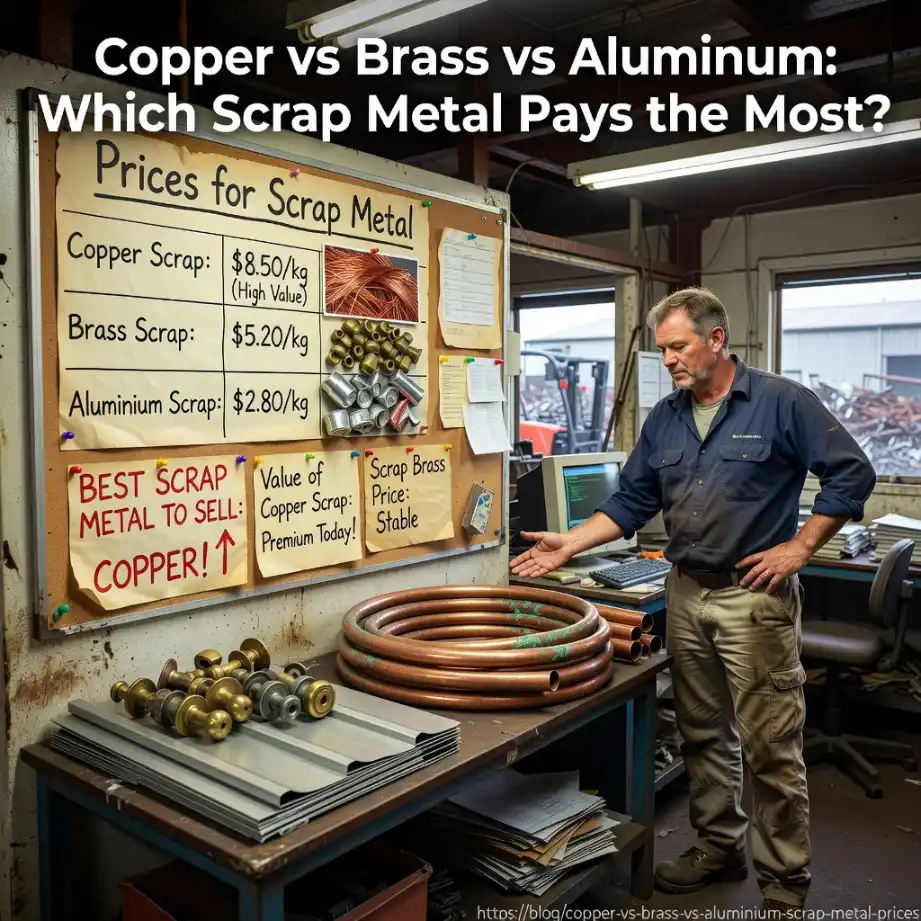
There’s a good reason for copper to always remain at the top of the scrap metal prices ladder: conductivity and demand. Copper scrap prices continue to rise because of high demand in electrical wiring, plumbing pipes, motors, and industrial equipment, as well as growth in demand for copper in construction and the electronics industry. Clean copper wire pipe or pipe components can yield a significant return in small quantities, versus other metals.
There are a couple of things that influence just what you are going to receive for copper:
- Purity matters. Uninsulated copper wire has more value than insulated copper wire or copper that has a solder on top.
- Type counts. There is sometimes a small variation in price, depending on grade, for copper pipe, copper wire, and copper tubing.
- Condition helps. Copper with a painted or corroded surface generally will command lower rates than clean, bright copper.
These metal prices tend to change from week to week as well as from month to month with the global commodities market, so it’s better to have a quote the same day from a local recycler than off an old price that you saw online last month. Wondering whether it’s worth stripping that insulation yourself first? Read our guide on clean scrap metal versus coated scrap before you decide.
When It Comes to the Home of Electronics, Brass Is the “Safe” Choice
Brass is also more akin to copper than to most of the other kitchen metals, so it is well-suited if you’ve got old taps, fittings, door handles or musical instruments nearby. The movements of scrap brass prices tend to follow the movements of copper prices, as brass is one of the alloyed products of copper and zinc, and if the price of copper increases, the scrap brass price will also rise, although at a less proportionate rate of rise per kg.
Here are a few interesting facts about brass:
- It’s dense and heavy, and even a fairly ordinary bucket of brass fittings can pay out!
- Common household sources include plumbing brass, bathroom fixtures, and old ammunition casings.
- Unmixed brass (which should be cleaned and free of steel screws or rubber washers) will yield a better rate than mixed brass.
When you are decorating a new bathroom or kitchen, it may be worth consolidating the old taps and fittings in a special envelope as they can be recycled.
Aluminum: The Volume Player
When it comes to pay, copper or brass offer more per kg than does aluminum, but it’s not a cheap material to overlook. Lightweight, so on a small scale, the numbers can be small, but if you’re like most people and have a construction site to clear or old window frames, car parts, or a pile of aluminum cans, then the aluminum scrap prices can add up quickly, just because of the volume!
This is where aluminum comes into play the most:
- Lots of window frames and door frames from renovations.
- Vehicles - rims, engines and radiators.
- Cans and sheet off-cuts or building site waste and debris.
Aluminum is also infinitely recyclable, meaning demand is not adversely affected even when the metals market is down.
What’s the Best Scrap Metal to Sell?
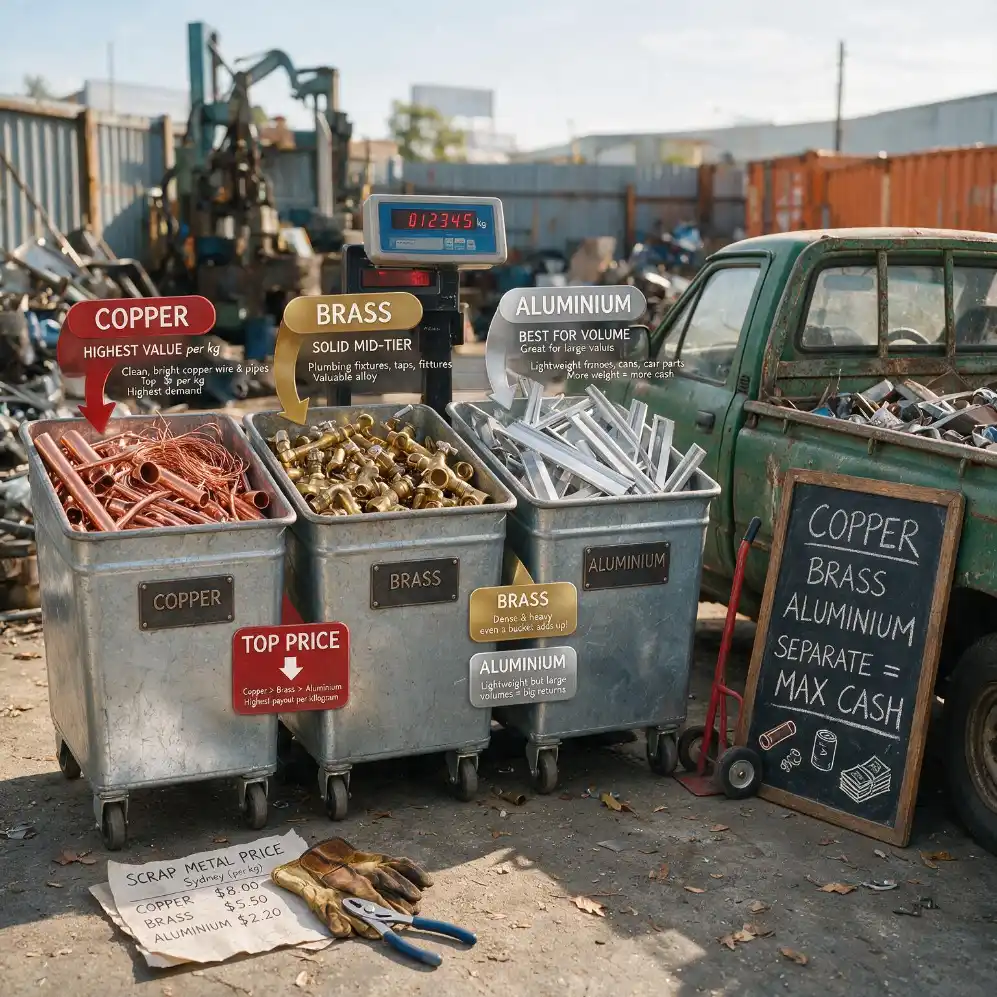
If someone wants to know what the best scrap metal to sell is, they’ll have to ask what they have. Copper is best on price per kg, brass is a fantastic choice where you have fittings or fixtures, and aluminum is good on volume for a larger clean-out. The secret isn’t choosing a love for metal; it’s organizing all the metal obtained into a priceable order so that each metal does not get averaged down, being called “mixed scrap.”
As with everything else in life, the key to this is to think simply:
- When there is limited wire or pipe → copper is likely to be most cost-effective on a per kg basis.
- Note: if clearing fixtures, taps or fittings, then brass should be separated out.
- When you have a high quantity of frames, parts or cans → aluminum’s payout adds up quickly.
Making the Best of Your Scrap
However, because the prices of metals available for recycling fluctuate with the global commodity markets, the price received for scrap metal won’t necessarily be the same from one day to the next, or even from one month to the next! Our guide to scrap metal price trends explains exactly why. People who deal with these metals every day can weigh and determine your load’s actual value, rather than averaging numbers posted somewhere on the web, which are too old to be accurate. Our Metal Max Recyclers Sydney team sorts and values copper, brass, aluminum, and general metal recycling (other metals) within our Sydney facility, with no hidden fees, clear pricing, and payment will be made once the scrap has been weighed, on the same day.
If you have a mixed-up pile like Dave’s, it’s best to give the team a call before you feel you can’t tell the difference between the metals — separating them is the quickest and simplest way to increase your stash. It also helps to understand the difference between ferrous and non-ferrous metals, since copper, brass, and aluminum all sit in the higher-value non-ferrous group, and to check which household scrap metal items around your home might already contain them.