Metal Max Recyclers
How Do You Separate Scrap Metal to Get a Better Price?
Published November 21, 2026 · METALMAX Recyclers
You’ve stripped out a bathroom in Parramatta, and the garage now holds a bit of everything. There’s copper pipe still joined to brass taps, a few lengths of aluminium window frame, steel offcuts and a tangle of old cable. It all looks like scrap. To a yard, each piece is worth something different.
Scrap metal sorting is the simplest way to change what you’re paid for a load. Sorted material is quick to assess and easy to price. A mixed pile is usually valued at the lowest grade in it, because someone has to separate it before it can be recycled.
This post covers how professionals sort, which grades matter, and what to leave out of the load.
Quick answer
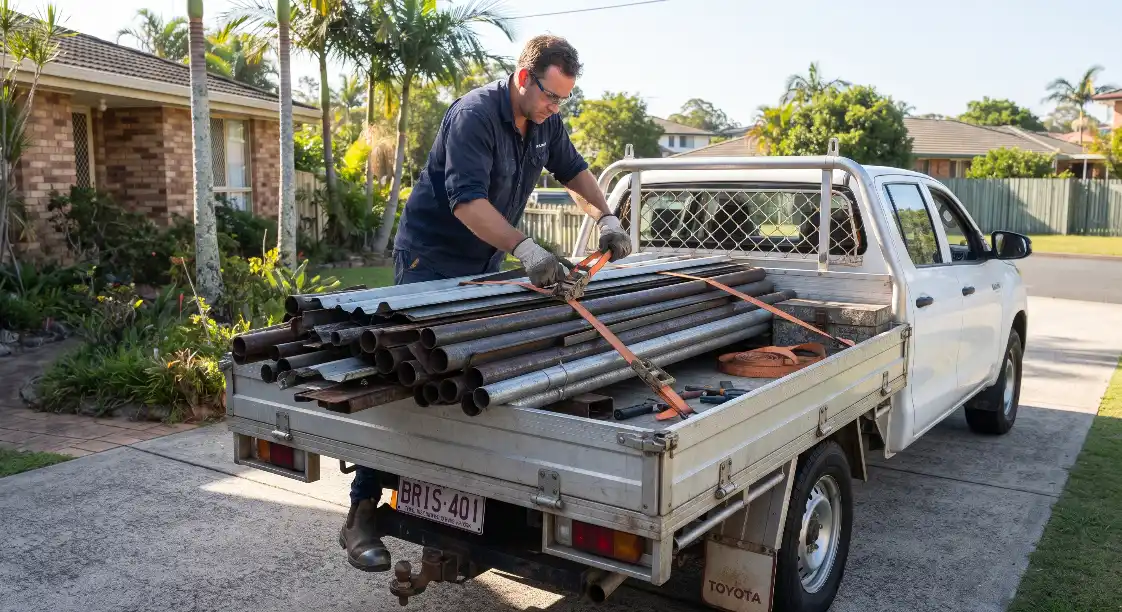
- Split your load into copper, brass, aluminium, steel and iron, and stainless steel. Keep cable separate.
- Use a magnet. Steel and iron stick, while copper, brass and aluminium don’t.
- Remove plastic, rubber, timber and fixings where you can do so safely.
- Clean, single-metal piles are priced at their own grade. Mixed piles are usually priced at the lowest one.
- Send photos first, so we can confirm what we accept before you load.
Why scrap metal sorting changes what you’re paid
Every metal has its own price per kilo, and each metal has grades within it. A yard can only price what it can identify. If a bin holds copper, brass fittings, and steel clips, that load has to be separated, and the labour comes off your return.
Contamination matters too. A length of copper pipe with a steel nut still attached is no longer clean copper. A window frame full of glass and rubber seals is no longer clean aluminium.
Sorting doesn’t change the market. It decides which rate applies to your material. Check our prices page for current rates, and read why scrap metal prices go up and down if you want to understand the swings.
The main types of scrap metal
Most Sydney renovation and workshop loads contain some mix of the materials below.
| Metal | How to spot it | Magnet | Common sources | Typical value vs steel |
|---|---|---|---|---|
| Copper | Reddish-brown, heavy | NO | Pipe, cable, wiring | Higher |
| Brass | Yellow-gold, heavy | NO | Taps, valves, fittings | Higher |
| Aluminium | Silver-grey, light for its size | NO | Window frames, sheet, cans | Higher |
| Stainless steel | Bright, doesn’t rust | Usually not | Sinks, benchtops, appliances | Higher |
| Steel | Grey, heavy, may be rusty | Yes | Racking, offcuts, sheet | Baseline |
| Cast iron | Dark, very heavy, brittle | Yes | Baths, old pipes, machinery | Lower |
Colour and weight help when the magnet doesn’t settle it. Some stainless grades are weakly magnetic, so if you’re unsure, ask us.
How to separate scrap metal at home or on site
Start with a magnet
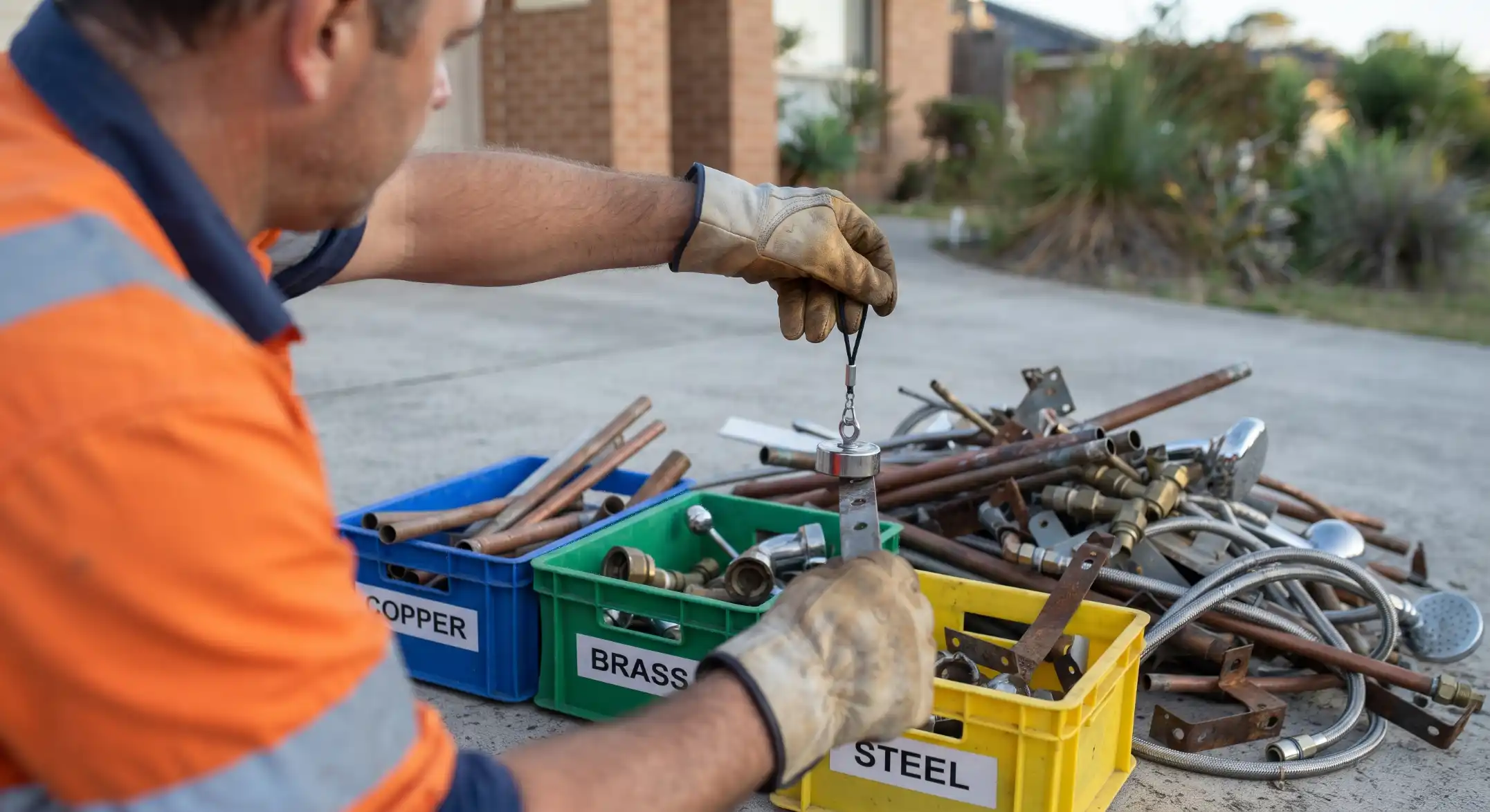
Run a magnet over each piece. Whatever sticks goes into the steel and iron pile. Whatever doesn’t stick goes into a second pile for copper, brass, aluminium, and stainless. This one step does most of the work.
Split copper, brass and aluminium
Copper is reddish-brown, brass is yellow, and aluminium is noticeably lighter than the other two. Put each in its own tub or crate.
Chrome-plated taps can be brass underneath, but cheaper ones are often a lighter alloy. If you’re unsure, ask us before you pile them in with the brass.
Our pages on copper recycling, brass recycling and aluminium recycling cover what we handle for each.
Handle steel, cast iron and stainless separately
Keep heavy steel apart from thin sheets where it’s easy to do so. Leave cast iron baths whole, because they’re brittle and heavy, and breaking them up is a quick way to get hurt. Stainless sinks and benchtops should have their own pile, away from ordinary steel.
Strip what isn’t metal
Remove plastic, rubber, timber and loose fixings where you safely can. Drain fuel, oil and water from machinery and tanks before loading.
Never burn the insulation off the cable. The fumes are toxic, and burning isn’t needed to recycle the copper.
Keep specialised items out of the metal piles
E-waste, catalytic converters, DPFs and car batteries are handled separately from general metal. Don’t mix them in. See our e-waste recycling page, or contact us for the rest.
Understanding scrap metal grades
Grade describes how clean and uniform a metal is. Grade names vary between dealers, so you don’t need to memorise them, but the logic is consistent.
| Metal | Higher grade | Lower grade |
|---|---|---|
| Copper | Bare, bright pipe, free of solder, paint and fittings | Pipe with brass fittings, solder, paint or insulation attached |
| Brass | Clean fittings with no plastic or steel parts | Valves with plastic handles or steel parts still attached |
| Aluminium | Clean frames with no screws, glass or rubber seals | Painted or mixed pieces with steel fixings or glass |
| Steel | Heavy, clean offcuts and plate | Thin sheet, or steel with timber, plastic or concrete attached |
What an experienced yard hand checks first
A good yard hand looks past the top layer. They check what’s underneath, whether the copper is bright or corroded, and whether the aluminium is free of steel screws.
Hiding mixed metal under clean pieces doesn’t pay. Expect the whole load to be assessed.
Scrap metal sorting on tight Sydney sites
Access shapes how you sort. In a CBD fit-out, you may have a booked loading dock and a small lift. Sorting into crates that fit the lift, and telling us the lift size, helps us plan the right truck.
Strata buildings in places like Chatswood often have booking windows and noise rules. Narrow Inner West laneways in suburbs such as Marrickville can limit truck access.
Fit-outs and renovations produce copper pipe, aluminium frames, steel racking and electronics together. Sort into separate bins as the work happens, not at the end. If sorting is difficult on your site, ask us whether we can help.
If you’d rather not move the load yourself, read our guide to scrap metal pickup services in Sydney.
A skip bin takes everything away and charges you for it, including metal that has value. A metal collector may take the valuable material and cost you less overall.
Is sorting worth the effort?
On a small load, a few labelled tubs take little time and can lift the grade of the whole load.
On a large site, don’t aim for perfection. Split the obvious groups, photograph them and send them over. We’ll tell you where extra effort is likely to pay and where it isn’t.
Common mistakes to avoid
- Mixing everything in one bin: It lowers the value of the whole load.
- Leaving fittings attached: Copper pipe with brass fittings is priced below clean copper.
- Burning cable: It’s toxic and unnecessary.
- Assuming all silver-coloured metal is aluminium: Check with a magnet.
- Bringing items we can’t accept: Gas bottles, fuel-filled items, and asbestos-containing material generally can’t be accepted. Contact us to confirm before you load.
- Comparing only per-kilo rates: Count fuel, time and vehicle hire as well.
- Forgetting ID: Missing ID can hold things up.
Payment, ID and NSW law
Scrap metal dealers in NSW are regulated by NSW Police under the Scrap Metal Industry Act 2016. In general, dealers must keep records of what they buy and who they buy it from. They also cannot pay for scrap metal in cash, by a cheque payable to cash, or with goods or services.
As a seller, you may be asked to show a photo ID. Our guide to the ID needed to sell scrap metal in NSW has more detail. For current requirements, see the NSW Police scrap metal industry page.
Separately from the law, Metal Max Recyclers pays by bank transfer (EFT) and asks for ID where needed. This is general information, not legal advice.
Red flags when choosing a recycler
Be cautious if a recycler:
- Quotes a price without asking what the metal is
- Doesn’t ask for ID
- Offers a flat rate with no photos or description
- Won’t say where the material goes
- Changes the price at pickup with no clear reason