Metal Max Recyclers
Storm/Flood Clean-Up: How to Safely Dispose of Damaged Metal Appliances & Structures
Once the storm has passed and the water retreats, things begin. Carpets muddy, ceiling water-stained, roofing paper warped, fridge waterlogged, fencing rusted, and appliances that suddenly cannot be plugged in, storm and flood damage don’t always produce water-soaked carpets and stained ceilings. In the case of storm cleanup and metal disposal, you understand that you will need to take a unique approach next. It is about safeguarding your family, your employees, and your property against dangers that aren’t so apparent wherever you look.
We have been on the scene of the flooding in Australia more times than we can count, as a construction-based team. One thing, however, is always true: when the metal is all that’s left following the storm, it is not generally “just scrap.” It may be sharp, wet, live, or weak. This guide will lead you through how to do it safely, legally and effectively, so that it doesn’t just simply “go away”.
So Why Is Flood Damaged Metal Special?
Water and metal don’t mix well. Standing water after a flood begins to corrode the metal soon after the flood, and it is NOT just cosmetic corrosion damage. The outward edges will become sharper and brittle owing to rusting. Inside appliances, electrical components are able to hold a charge even when the power is turned off. Structural metal, such as roofing, gutters or even framing, may have serious internal structural issues and yet appear to have nothing wrong on the surface.
This is where it’s not enough to just get an item with damage to the curb side. There are a few factors that occur during a flood that make disposal more risky than normal:
- Residual charge and short circuiting of electrical wiring within the appliance
- Flood waters can be contaminated with chemicals, metals, or can be soiled by sewage
- Structural steel and aluminum can get hidden stress fractures
- When the post-storm conditions are humid, the rusting process speeds up quickly, in just a few days, posing sharper dangers
Saying, “safe until proven safe,” is the mentality employed to keep clean-up crews and homeowners out of hospitals.
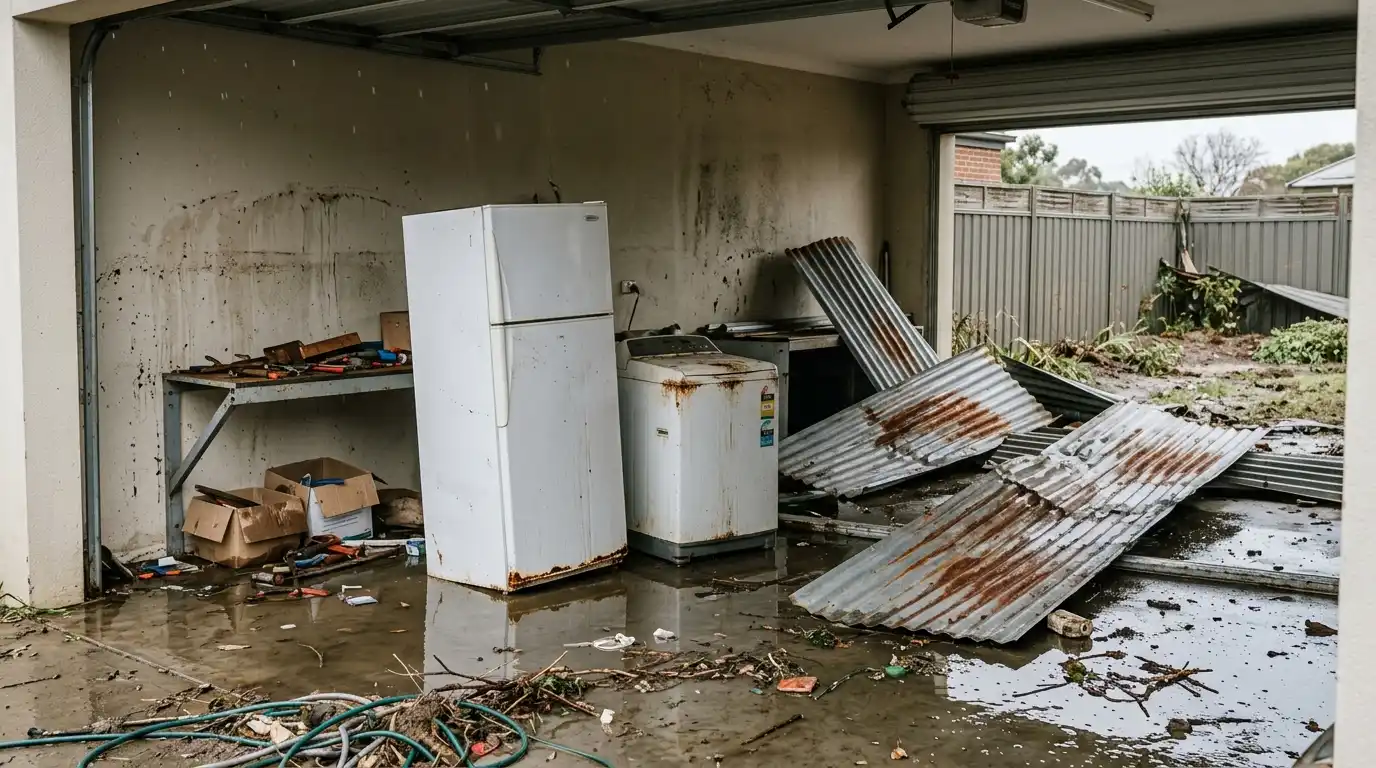
A Real Situation From a Client’s Site in Western Sydney
One of our clients, a small business owner in Western Sydney, rang us a short time after a heavy rainstorm struck her property. Her garage was hit the hardest. The washing machine and an old bar fridge were all flooded for more than 24 hours, as well as a bit of corrugated roofing.
She attempted to move the fridge by herself before calling us because things got really bad. It is worth noting that the appliance was still connected to an appliance powerboard which was in the standing water. Fortunately, she was not injured, but it came close. When we arrived, the roofing sheets had sheared in a few places as well, and had sharp edges that cut through work gloves.
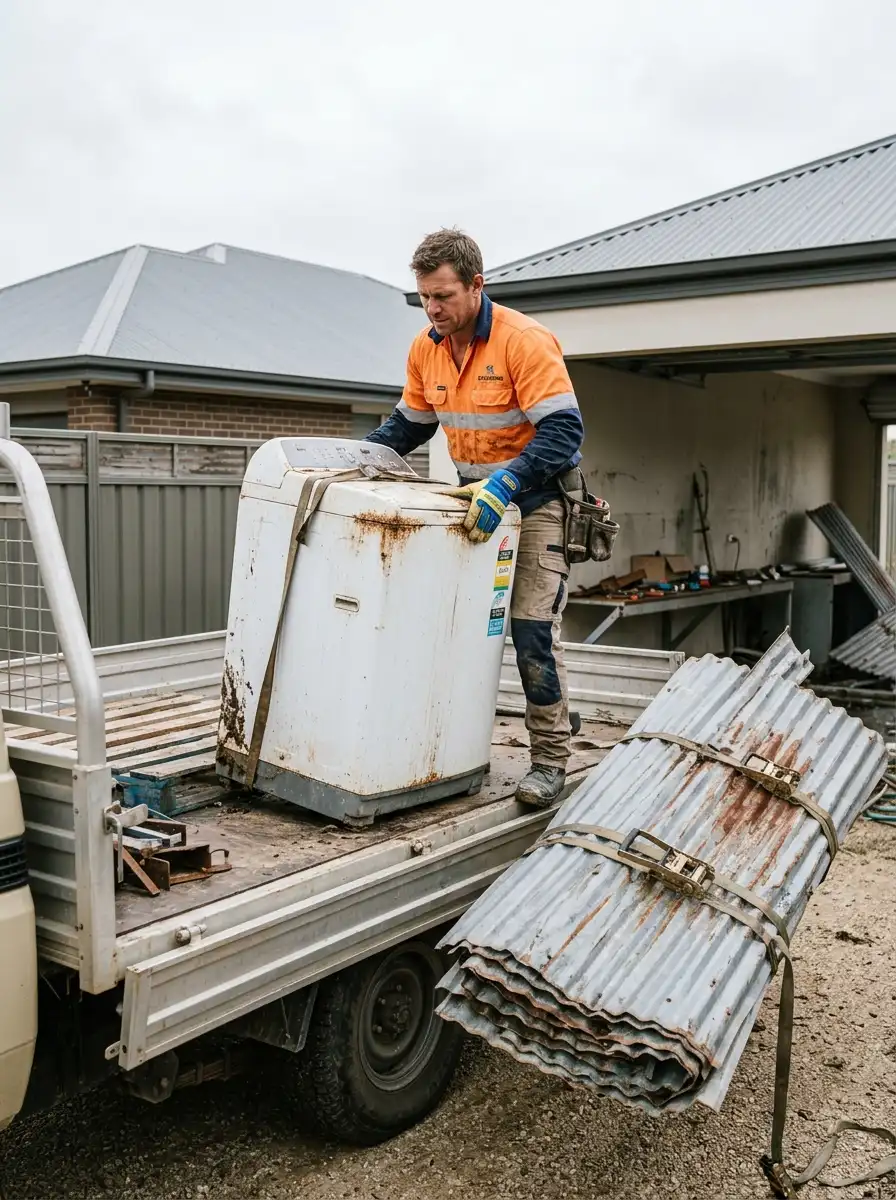
First, we isolated the power supply, and then diligently evaluated each article before contacting it. The items were carefully tagged, safely removed, and disposed of via the appliance scrap metal recycling practice. The roofing sheets were bundled, the edges secured, and moved separately. Within one day, her garage was emptied, and she had documentation of her insurance claim to prove that it was disposed of “right.”
Her situation was by no means unique. It is a scenario that we see happen repeatedly when cleaning up after a storm; people attempting to do it themselves when they don’t realize exactly what dangers lie beneath the surface in regard to metal affected by flood waters that aren’t obvious till something goes wrong.
After a Storm, How to Properly Dispose of Damaged Metal Safely
1. Turn Off the Power Before You Do Anything to the Area
Always confirm that an appliance is “off” even if it is not plugged in. If powered during flooding, consider it “live” until you have a licensed electrician or trained technician verify its safety. Before transporting any metal objects, turn off the electric power to the area at hand.
2. Evaluate Structural Metal for Hidden Damage
Roof, fence and framing may appear robust but may have internal faults. Slowly visit the site looking for:
- Contortion of the seams and joints
- Bubbling paint or coating being dislodged by rust
- Items with loose fixings or fasteners that have come undone
- Worn or sharp edges from shearing and bending
If areas appear to be structurally unsound, do not remove sections on your own. This is an area where using good lifting equipment and PPE can make a real difference to a construction team.
3. Remove Appliances from Structural Debris
The damaged appliances, like refrigerators, washing machines, dryers, etc., must be treated differently from roofing or fencing. Parts of appliances may need to be processed separately, due to the presence of refrigerants, oils, or electrical components. Separating them from the general pile of damaged metal recycling helps in a speedy removal process and makes it more environmentally friendly, according to local waste regulations, if any.
4. Know What to Keep in Your First Aid Kit
Even though there is only a small area that needs cleaning after the metal damage condition, there is still a need for proper protection. At minimum:
- Puncture-resistant gloves
- Steel-capped boots
- Long sleeve and pants
- Eye protection when cutting or moving sharp portions
5. Properly Sort Out, Remove, and Recycle
When all this is evaluated and carefully separated, the last step is to remove it from the premises via a licensed metal recycling company. It’s not only a convenience, as the collection of a properly itemized metal product is done responsibly, but it also avoids the general trash stream and may include documentation as part of the process, which is valuable when needing to use it for insurance purposes.
When Does “Do It Yourself” Disposal Fail?
After a storm has caused enough havoc, it’s easy to feel like cleaning up is unnecessary and allows you to save time and money. Unfortunately, do-it-yourself disposal of damaged metals presents a very definite downside, however:
- Electrical items affected by damage or contamination are not accepted for kerbside collections in council containers
- Sharp or corroding metal is a true injury hazard when not handled properly
- Garbage disposal may be an issue if they don’t dispose of the trash properly; local environmental rules may be broken
- Submissions for insurance claims may be either delayed or rejected should they be submitted without enough evidence to justify safe removal
Hiring a professional firm, either a construction contractor or a metal recycling firm, is typically more cost-efficient over time than incurring any injury, loss of insurance, or penalty for recycling the metals.
Doing the Right Thing the First Time
Recovering from storm and flood is challenging enough as it is; add unnecessary risk to the equation. It could be a single appliance that’s out of order, or it could be an entire section of roofing that’s blown off; either way, the best route to take is the same: you must cut the power, determine what’s been damaged before intruding, and, for the latter case if it’s an appliance, separate the appliance from the damage, and then protect yourself and contact a removal company that’s at least familiar with the process.
We have developed our model on just this: everything is different in every clean-up area, as each storm causes damage in a different way.
If your property has been hit by storm or flood damage and you’re not sure where to start with the metal clean-up, our team is here to help, safely, quickly, and without the guesswork. Get in touch today and let’s get your site cleared, sorted, and back on track.